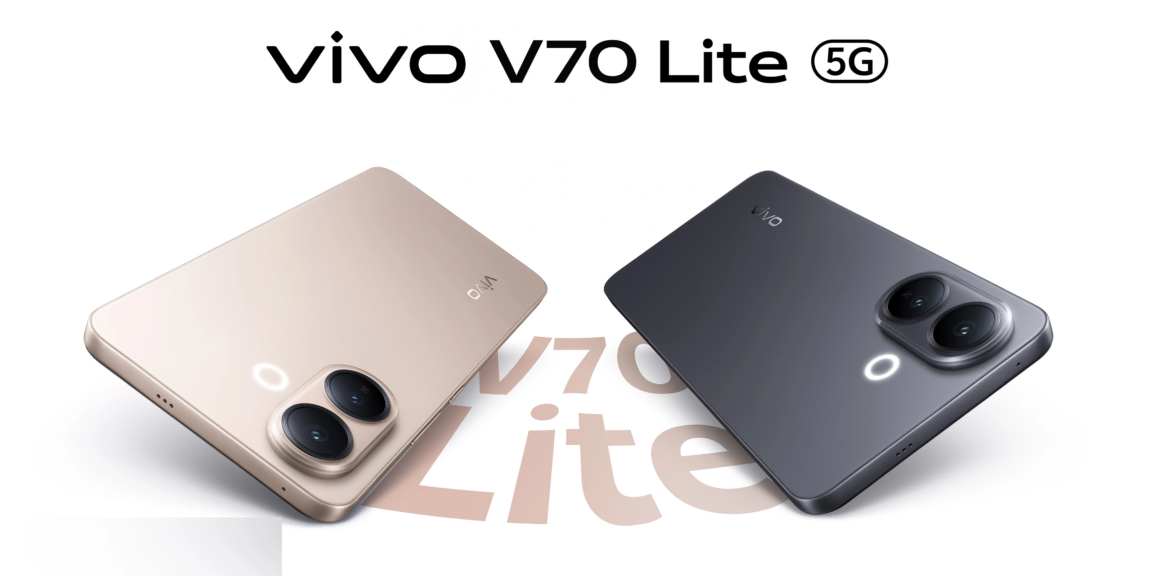
Vivo V70 Lite 5G: The New 90W Speed King
Vivo quietly altered the mid-range landscape on June 5, 2026, dropping the sleek, premium-crafted V70 Lite 5G worldwide.

The smartphone landscape has fallen into a routine where budget and value-tier devices are treated with absolute predictability. Most massive hardware brands follow a strict formula: they take a cheap, generic plastic framework, drop in a laggy entry-level chipset, and slap on a low-resolution camera array that struggles the second your indoor lighting isn’t completely perfect. Independent tech reviewers and everyday consumers are growing incredibly tired of this compromise. You are constantly forced to choose between spending a small fortune on an over-hyped premium flagship or dealing with a bulky, stuttering budget device that feels outdated before you even pass the checkout counter.
On June 5, 2026, Vivo quietly shattered that dynamic without any flashy marketing campaigns. Launching directly into the global market with an emphasis on minimalist elegance and efficient processing, the tech giant officially unveiled the Vivo V70 Lite 5G, joining its larger siblings, the V70 and V70 Elite.
Ditching the cheap, industrial plastic shells common to this price category, this release introduces a striking, clean pill-shaped dual camera island and an ultra-thin 7.59mm silhouette that weighs just 194 grams. By pairing an incredibly sleek physical profile with a massive power cell, Vivo is proving that elegant, high-end aesthetics do not have to be locked behind a thousand-dollar paywall. Let’s look beneath the surface at the precise hardware configuration to see how this mid-range contender stands out from the crowd.
Technical Specifications: The V70 Lite Engineering Matrix
To understand how Vivo managed to balance an ultra-slim design profile with heavy utility, we can break down the factory-verified internal component layout:
| Hardware Subsystem | Factory Component Configuration Profile | Real-World Operational Impact |
| Processing Silicon | MediaTek Dimensity 7400 Turbo (4nm Architecture) | Delivers smooth app transitions and snappy 5G multi-tasking |
| Memory Configurations | 8GB / 12GB LPDDR4X RAM (+12GB Virtual Expansion) | Eliminates background app reload lag during heavy multi-tasking |
| Storage Architecture | 128GB / 256GB UFS 3.1 (Non-Expandable Internal) | Moves massive media structures instantly with elite write speeds |
| Display Panel | 6.77-Inch 120Hz Fluid Q10 Plus AMOLED Matrix | Generates vibrant color depth with a blinding 3,000 nits peak brightness |
| Primary Camera Array | 50MP Sony IMX882 (f/1.79) + 8MP Ultra-Wide (120° FOV) | Shoots uncompressed 4K video at 30fps with native gyro-EIS |
| Front Selfie Sensor | 32MP Punch-Hole Camera (f/2.5 Focal Aperture) | Delivers clean, high-resolution portrait captures and 4K logs |
| Battery Engineering | 6,500 mAh High-Density Silicon-Carbon Cell | Provides exceptional multi-day endurance inside a thin chassis |
| Charging Pipeline | 90W Flash Wired Charging (Bypass Charging Ready) | Restores 100% capacity in 52 minutes while maintaining low heat |
| Chassis Framework | 7.59mm Ultra-Slim Profile with IP65 Element Rating | Provides total low-pressure water jet and dust tight protection |
| Software Baseline | OriginOS 6 Framework Powered by Android 16 | Optimizes background memory to prevent system stuttering |
1. Defying Thinness Conventions: The 6,500 mAh Battery Miracle
Historically, smartphone engineering has been bound by a harsh physical law: if you want a massive battery that lasts for days, you have to accept a thick, heavy brick that stretches out your pocket and feels uncomfortable during long handling sessions. Standard lithium-ion configurations require immense physical volume to scale up capacity, which forces value-tier devices to choose between thin aesthetics or decent longevity.
The V70 Lite completely side-steps this legacy design flaw by implementing next-generation silicon-carbon battery chemistry. This advanced material layout provides a significantly higher energy density than traditional power cells, allowing Vivo to pack a massive 6,500 mAh reservoir inside a remarkably slim, featherlight 7.59mm frame.
The phone sits elegantly in the hand, defying the bulky proportions of its value-focused competitors. This level of power optimization is exceptional for active digital consumers. If you are comparing this structural balance against the high-efficiency battery engineering and extreme power optimization grids tracked inside our comprehensive Ember Mug 3 review, you know how difficult it is to balance true daily endurance with compact, lightweight ergonomics. Furthermore, when plugged into the 90W Flash Charger, the phone zips from empty to a full 100% charge in just 52 minutes. It even incorporates an elite Bypass Charging layer, allowing power to feed directly into the system instead of the battery during intense gameplay to eliminate internal degradation.
2. Fluid Visual Performance: The 3,000-Nit Q10 Plus AMOLED Panel
Beyond the impressive battery engineering, the June 5 launch serves as a phenomenal showcase for accessible screen tech. The V70 Lite features a gorgeous, expansive 6.77-inch Q10 Plus AMOLED display that resolves at a sharp 2392 x 1080 pixels. This screen generates deep, ink-like blacks and striking contrast boundaries, while certified HDR10+ compliance brings streaming content to life.
What makes this budget-friendly display truly jaw-dropping is its 3,000 nits peak brightness. This ensures the screen remains completely legible even under blinding, direct outdoor midday sunlight, effortlessly outpacing traditional mid-range setups.
Achieving a totally fluid 120Hz refresh rate at 387 ppi density without causing micro-stuttering or sudden system drops requires a highly optimized processing pipeline. Whether you are analyzing the premium hardware designs, high-end mobile tracking matrices, and noise-isolated engineering setups discussed inside our comprehensive Apple AirPods Max 2 review, or evaluating a mid-range daily driver, having a software layer that interfaces perfectly with your display hardware is what keeps your animations looking buttery smooth under heavy use. Backed by SGS Low Blue Light certification, the V70 Lite handles complex system transitions beautifully, protecting your eyes while dropping down its refresh rate dynamically during static tasks to save every drop of power.
3. Sustained Power: The 4nm Dimensity 7400 Turbo
Powering the internal architecture is the newly deployed MediaTek Dimensity 7400 Turbo chipset. Built on an advanced, cutting-edge 4nm processing node, this silicon package features a high-performance cluster running at 2.6 GHz alongside a Mali-G615 MC2 graphics engine to balance quick application launches with exceptional thermal stability.
The phone is available globally in either an 8GB or 12GB LPDDR4X RAM trim, and includes a massive +12GB Virtual RAM expansion layer to hold dozens of system tools open in the background without a single system lock.
The chip operates comfortably under load, keeping your everyday social feeds, multitasking tabs, and photo editing apps running crisply without generating uncomfortable thermal hotspots on the back of the casing. This focus on cool, sustained performance mirrors the underlying hardware optimizations and mobile background tuning frameworks we track closely when phones handle heavy consumer cloud tools; for instance, checking out the premium operational features and unthrottled workflows mapped out in our ChatGPT Plus feature analysis shows how critical balanced hardware scaling is to maintaining performance without hitting a system wall.
4. Uncompromised Mobile Imaging: The 50MP Sony IMX882 Array
You can’t talk about a premium Vivo device without diving deep into the camera optics. Built cleanly into that vertical, pill-shaped rear module is a heavy-hitting dual system anchored by a 50-megapixel Sony IMX882 primary lens operating at a wide f/1.79 aperture.
The main camera captures rich, detailed images with an impressive 1/1.95-inch sensor size, using swift phase-detection autofocus (PDAF) to lock onto moving subjects instantly. Sitting right beneath the main sensor is an 8-megapixel ultra-wide-angle lens that offers a sprawling 120-degree field of view, making it the ultimate tool for architectural layouts, vast landscapes, and crowded group shots.
For content creators, both the dual rear system and the high-density 32-megapixel front selfie camera support gorgeous 4K video recording at 30fps. Backed by real-time gyro-EIS (Electronic Image Stabilization), the phone actively cancels out accidental hand shakes and walking vibrations, delivering buttery-smooth cinematic clips without the need for external stabilizers.
5. Next-Gen Ecosystem Integration: OriginOS 6 & Android 16
Keeping your local device ecosystem running smoothly requires keeping an eye on how advanced AI models and cloud backends are evolving. Out of the box, the Vivo V70 Lite 5G launches onto the bleeding edge of modern mobile software, running OriginOS 6 based on Android 16. This advanced interface introduces refined system physics, incredibly rich desktop customizations, and deep AI-driven optimization loops.
Staying updated on these infrastructure shifts is incredibly helpful for tech enthusiasts. For example, exploring how new model variants handle complex developer tasks, real-time logic, or automated system tasks inside our detailed Grok 4.3 review gives you a clear look at how modern web platforms are shifting to support smart consumer devices. OriginOS 6 uses this modern computing logic to dynamically clean up system cache blocks and allocate processor cycles in real time, keeping the device feeling blazingly fast month after month.
The Verdict: A New Target for Value Seekers
The global arrival of the Vivo V70 Lite 5G (priced starting at an aggressive AED 1,099 / ~$299 for the 128GB version, and AED 1,299 / ~$354 for the premium 256GB storage variant) is a highly refreshing, incredibly practical addition to the mid-range smartphone tier. Available in breathtaking Black and Gold colorways, its IP65 dust and water-resistant build ensures that premium, eye-catching style remains completely safe from unexpected rain showers and splashes.
Pros
- Exceptional Battery Longevity: Silicon-carbon tech packs a massive 6,500 mAh capacity inside a wonderfully slim 7.59mm frame.
- Blinding AMOLED Display: 120Hz refresh rate paired with a stunning 3,000 nits peak brightness makes outdoor viewing effortless.
- 4K Cinematic Video Production: Both front and rear sensors support unthrottled 4K video recording with stabilization.
- Elite 90W Flash Charging: Fully recharges the immense battery tank in under an hour with safe, built-in bypass charging modes.
- Robust Elements Defense: The IP65 structural rating keeps the internal circuitry safe from dust and water splashes.
Cons
- No Expandable MicroSD Storage: The dual nano-SIM card tray lacks a slot for external memory expansion.
- No Legacy Wired Audio: Fans of analog setups will need to carry a USB-C adapter or transition over to wireless options.
To monitor live regional availability logs, local carrier bundle options, and retail launch promotions directly from the source, you can jump over to the official Vivo Global Press Center to see how the brand is redefining everyday value!
What do you think?
Does the combination of an ultra-slim 7.59mm design, a 50MP Sony camera, and a massive 6,500 mAh battery make the newly announced Vivo V70 Lite 5G your favorite mid-range option of the season? Let us know your thoughts in the comment section below!