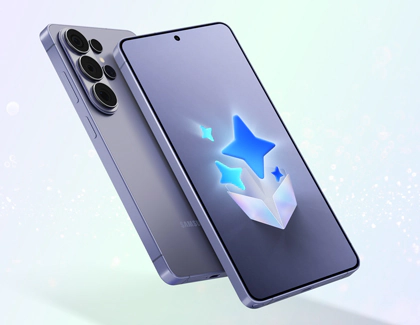
The Galaxy S26 Big Bet on Agentic Vision AI
Samsung's Galaxy S26 ushers in "Agentic Vision," evolving mobile AI from passive tools to proactive, multi-object-aware camera ecosystems.

Image Credits: Samsung
There was a time, not too long ago, when mobile artificial intelligence felt like a collection of party tricks. You could point your camera at a foreign menu to translate it, or scribble a messy circle around a pair of sneakers on your screen to find out where to buy them. It was neat, but it was entirely reactive. The phone sat quietly, waiting for you to initiate, process, and direct every single action.
With the release of the Samsung Galaxy S26 series, that passive dynamic has officially been shattered. Samsung has shifted its visual intelligence framework away from basic “point-and-shoot” algorithms and toward Agentic Vision—a proactive, contextually aware ecosystem that understands not just what is in front of the lens, but the intent behind why you are looking at it.
By unifying legacy Bixby Vision accessibility with cutting-edge Galaxy AI systems, Samsung is transforming the smartphone from a simple camera into an active partner that perceives the world alongside you.
1. Agentic Image Search: Deconstructing the Whole Picture
When Google and Samsung first introduced “Circle to Search,” it changed how we interacted with our screens. But it had a glaring limitation: it was strictly linear. If you saw an influencer wearing an incredible outfit, you had to circle the sunglasses, wait for the search results, close them out, circle the jacket, wait again, and finally circle the shoes. It was a repetitive, single-object workflow.
The Galaxy S26 series introduces Multi-Circle Multi-Object Recognition. Powered by upgraded deep-learning models, the S26 allows you to circle multiple distinct items—or even an entire person—and deconstruct the scene in a single pass.
- The Style Solver: Tap and sweep over an entire outfit. The AI automatically segments the image, separating the sunglasses, the jacket, and the shoes into individual, simultaneous search streams. You get a neatly organized dashboard of results for each item at once.
- Contextual Coexistence: The system doesn’t just identify isolated objects; it understands how they relate to one another. If you circle multiple plants or animals in a single image, the search goes beyond basic identification to explain how those elements interact within their shared environment.
This is the core of “agentic” behavior: the system anticipates that when you look at a scene, your curiosity is rarely limited to a single pixel. It looks at the context of the whole frame.
2. Now Nudge: Proactive, On-Device Contextual Sensing
The most profound shift in the Galaxy S26 series is that the phone no longer waits for you to open an app to be helpful. Through Now Nudge, Samsung utilizes highly optimized, on-device Neural Processing Units (NPUs) to silently understand the context of your daily digital life.
Imagine a friend texts you: “Hey, do you have any photos from that concert we went to last Friday night?”
Traditionally, this requires you to exit your messaging app, open your Gallery, scroll back through hundreds of photos, select the right ones, tap share, find your messaging app again, and hit send.
With Now Nudge activated, the Galaxy S26 handles the heavy lifting instantly:
- Real-Time Analysis: The on-device intelligence scans incoming text notifications. It detects the query (“photos,” “concert,” “last Friday night”).
- Proactive Gallery Retrieval: The NPU immediately queries your photo library locally, finding images geotagged at the concert venue or timestamped during the event window.
- The One-Tap Suggestion: A subtle notification chip—a “nudge”—appears right on your screen. Tapping it displays the exact, relevant photos, ready to be sent instantly.
Because this data is processed entirely on-device via Samsung’s secure enclave, your conversations and photos never leave your hardware to sit on a remote cloud server. It is personal utility without the privacy compromise.
3. Photo Assist: Generative Reimagination
Once you have captured or retrieved an image, the S26’s Photo Assist turns the editing suite into a conversational playground. Rather than forcing you to master complex brush tools, magnetic lassos, or saturation sliders, Photo Assist uses multimodal generative AI to interpret natural language commands.
Voice-to-Edit Canvas: You can hold down the AI button and simply speak to your photo. Want to change a bright afternoon sky into a dramatic, golden-hour sunset? Just say, “Change this afternoon scene to twilight”.
Photo Assist doesn’t just slap a cheap filter over your photo. It completely rebuilds the lighting, adjusting how shadows fall across your subjects and recalculating reflections on wet pavement or glass surfaces to match the new light source.
If a photo of a birthday cake is missing a clean slice, or if a physical object is partially cut off at the edge of the frame, the generative model can “fill in the blanks” to restore the missing structures seamlessly. It bridges the gap between the photo you actually took and the memory you wanted to preserve.
4. Bixby Vision: Invisible Tech Made Visible
While Galaxy AI focuses heavily on productivity, search, and creative expression, Samsung’s legacy Bixby Vision framework remains a cornerstone of the device’s inclusive design. For visually impaired and low-vision users, Bixby Vision acts as a real-time, auditory translation of the physical world.
Using advanced optical character recognition (OCR) and spatial layout analysis, Bixby Vision transforms the S26’s high-resolution camera into a wearable assistant:
| Feature | Primary Function | Everyday Impact |
| Real-Time Sign Reading | Instantly scans and speaks street names, transit signs, and warning labels. | Enhances independent navigation in unfamiliar urban environments. |
| Object & Obstacle Description | Uses spatial AI to identify physical objects in the camera’s path and read them aloud. | Aids in locating personal items (like keys or cups) on a crowded table. |
| Live Menu Parsing | Scans complex menu layouts, separates headings from prices, and reads them in structural order. | Delivers a dignified, independent dining experience without requiring sighted assistance. |
Rather than dumping a wall of unstructured text, Bixby Vision understands the formatting of the real world. It recognizes that a restaurant menu has columns, that a medication bottle has critical dosage instructions, and that a warning sign requires immediate priority.
Moving Toward an Agentic Future
The Samsung Galaxy S26 series marks a clear line in the sand for mobile technology. We are rapidly moving away from the era of “smartphones” that merely host a collection of isolated apps, and moving toward contextual companions.
By merging on-device sensing, generative creativity, and accessible visual intelligence, Agentic Vision ensures that your phone doesn’t just see the world—it actually understands it.