The Full Breakdown Behind the Massive ‘Korea AI’ Blueprint
South Korea partners with NVIDIA in an unprecedented $500-billion-plus sovereign AI initiative, deploying Vera Rubin architecture to build massive national AI factories.

The geopolitics of technology have reached a defining turning point. As nations realize that outsourcing their digital intelligence to foreign cloud networks poses a critical threat to long-term economic sovereignty, the race to build domestic, localized computing infrastructure has intensified.
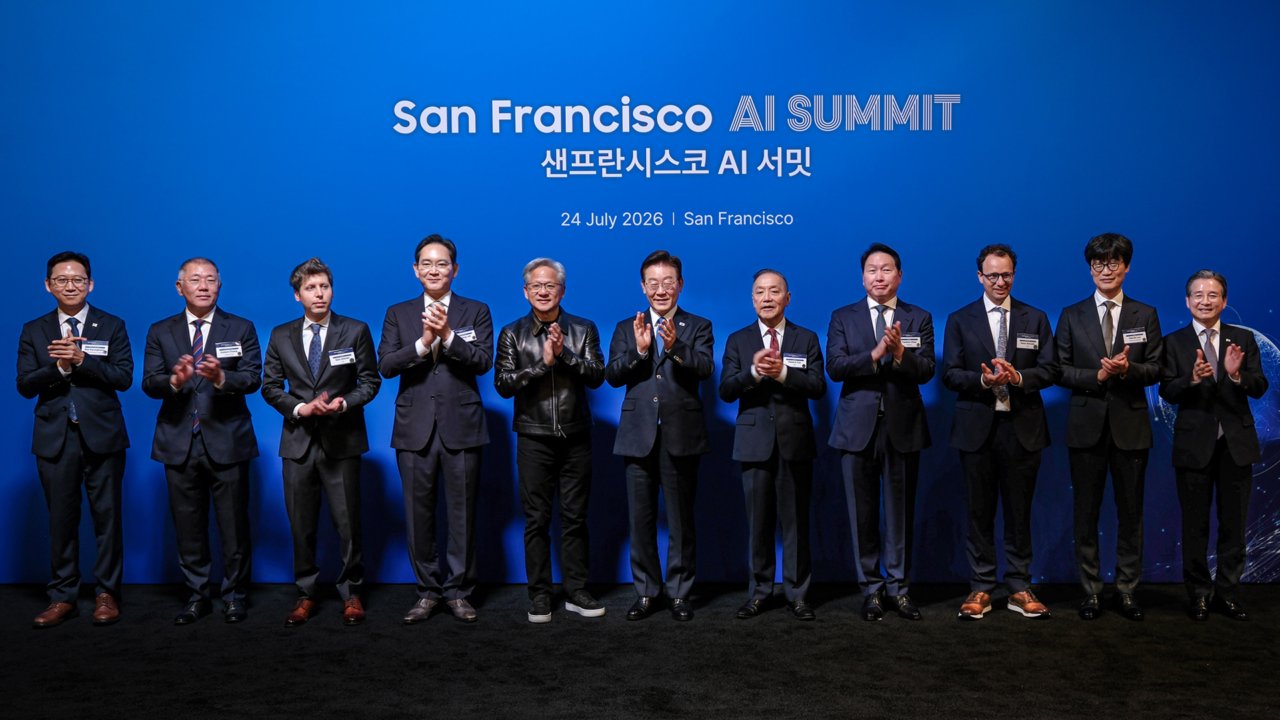
Leading this global shift is South Korea. In an unprecedented, historic sequence of announcements at the late-July 2026 AI Summit, the South Korean government, academic institutions, and industrial conglomerates, including SK Group and NAVER, unveiled a comprehensive, multi-layered alliance with NVIDIA. Valued at more than $500 billion, this sweeping “Korea AI” blueprint represents the largest concentrated national computing initiative ever established. It moves South Korea beyond being an early adopter of technology, positioning it as a self-sustaining global AI superpower.
1. The Power Grid Scale: SK Telecom’s 2-Gigawatt Mega-Factory
The crown jewel of this collaborative initiative is an absolute monster of data infrastructure engineering. SK Group and NVIDIA signed a formal Letter of Intent to deploy a massive, 2-gigawatt-scale AI Cloud ecosystem across South Korea.
To put two gigawatts of data center capacity into perspective: it is enough raw electricity to power more than 1.5 million mainstream homes simultaneously, now entirely dedicated to manufacturing AI tokens. Managed primarily by SK Telecom, this distributed network will utilize NVIDIA’s newly revealed, ultra-advanced Vera Rubin accelerated computing platform.
Crucially, these computing nodes will be built natively on the NVIDIA DSX reference architecture. Rather than running generic, multi-purpose cloud operations, the DSX blueprint links hardware, software compilers, and liquid-cooling management into a unified stack designed to output tokens at the absolute lowest cost per megawatt. Scheduled to begin dropping its first operational phases online in 2027, this infrastructure will serve as the heavy computational backend for the entire nation’s sovereign, physical, and agentic AI pipelines.
2. Closing the Hardware Loop: The SK hynix Long-Term Memory Alliance
A critical structural aspect of this multi-billion-dollar deal is its circular economic nature. During a historic meeting in Silicon Valley, NVIDIA founder Jensen Huang highlighted a fundamental truth of the modern computing revolution: “If not for the invention of High-Bandwidth Memory (HBM) in Korea, NVIDIA wouldn’t have been able to invent the supercomputers that power AI today.”
To secure its upcoming hardware pipeline, NVIDIA has officially entered into a long-term, binding AI memory partnership with SK hynix.
Under this deep agreement, SK hynix will stably supply and co-develop customized HBM4 memory arrays tailored specifically for NVIDIA’s Rubin architecture. This guarantees that while South Korea buys a quarter-million processing units from NVIDIA to populate its domestic clouds, the foundational component of those processors is built by Korean manufacturers on Korean soil, insulating both entities from unexpected global supply chain friction.
3. Industrial Scalability: NAVER, Brookfield, and GAK Sejong
While SK Group focuses on long-term infrastructure and chip design, NAVER Cloud is executing immediate, large-scale commercial deployments.
Partnering with asset management giant Brookfield, NAVER is massively expanding its core national AI factory located at the GAK Sejong data center. The facility is being scaled up to 200 megawatts of dedicated capacity, more than tripling its original blueprint.
This localized deployment will house roughly 100,000 NVIDIA GPUs operating on the Vera Rubin architecture. NAVER intends to utilize this massive localized power to run specialized NVIDIA Nemotron open models. These models will be fine-tuned directly on internal Korean data registries to develop customized enterprise models for critical, highly competitive national industries like shipbuilding, smart security, industrial manufacturing, and inclusive civilian public services.
4. Academic Cultivation: The NVIDIA-KAIST Joint Research Lab
A national infrastructure strategy is empty without elite domestic talent to run it. To address this, NVIDIA has joined forces with the Korea Advanced Institute of Science and Technology (KAIST) to open a brand-new, state-of-the-art AI research laboratory at the Kim Jaechul Graduate School of AI in Seoul.
Backed by an estimated $300 million investment, which includes $50 million per year in direct compute infrastructure access across a five-year window, the joint lab is focused on a singular paradigm: Agentic AI.
The lab’s priority is moving past standard chatbot workflows to build advanced, multi-step autonomous agent systems explicitly optimized for the Korean language, cultural nuances, and regional industrial regulations. To retain the country’s sharpest brains, the lab will fund at least ten elite KAIST researchers annually with direct internships at NVIDIA’s Silicon Valley offices, while offering top graduates full-time, permanent career placements inside NVIDIA. Parallel to this, NVIDIA is standing up AI Technology Centers (NVAITC) at both KAIST and Seoul National University (SNU) to focus on physical AI, deep robotics simulation, and advanced materials science.
The Strategic Blueprint: Manufacturing, Mobility, and Sovereignty
The collective impact of this multi-layered rollout completely alters South Korea’s industrial capabilities:
| Strategic Pillar | Core Industrial Partners | Operational Focus |
| Physical AI & Robotics | Hyundai Motor Group, SK Group | Deploying 50,000+ Blackwell/Rubin GPUs to power smart factories and train autonomous driving models. |
| Telecommunications | Samsung, SK Telecom, KT, LGU+, ETRI | Developing low-power AI-RAN base station tech to offload consumer device computing directly to the network. |
| Sovereign LLMs | LG AI Research, Upstage, NAVER Cloud | Using NVIDIA NeMo pipelines to build foundational reasoning models trained strictly on native data. |
The Verdict: The Golden Age of National Computing
The historic $500-billion-plus alliance between NVIDIA and South Korea establishes a completely new blueprint for how sovereign nations must approach the artificial intelligence age. By building out massive, gigawatt-scale infrastructure, locking down localized memory supply chains, and establishing direct academic talent loops, South Korea isn’t just buying hardware—it is securing its permanent computational independence.
As industrial facilities scale up and next-generation frameworks come online over the next few years, the “Korea AI” strategy ensures that the nation’s data, language, and industrial future remain entirely within its own control. The era of universal, foreign-hosted cloud dominance is fracturing, and South Korea, backed by NVIDIA’s ultimate silicon architecture, is leading the march into the sovereign frontier.
Alternate Compelling Title Options for Your Blog:
- The Sovereign Frontier: Inside South Korea’s Massive $500B AI Alliance with NVIDIA
- Gigawatts of Intellect: How NVIDIA and South Korea are Building the Ultimate AI Factory
- Chips, Talent, and Power: The Full Breakdown of South Korea’s Revolutionary “Korea AI” Blueprint
To track how these multi-gigawatt data deployments are altering international server hardware markets, check out our infrastructure deep dives over at the ForanTech Enterprise Hub. For official technical whitepapers and joint hardware specifications, visit the NVIDIA Global Newsroom and the SK hynix Media Center.