Siri AI: The New Architecture Built on Google Gemini
Apple unveiled its Apple Intelligence 2 framework on June 9, 2026, dropping an autonomous on-screen action model built without cloud dependency.

The consumer artificial intelligence ecosystem has spent the last few development cycles stuck in an incredibly rigid, highly fragmented execution routine. Major technology conglomerates have grown entirely comfortable rolling out heavy, remote server-side large language models that require massive data handshakes and persistent, ultra-fast internet connections to complete basic generative tasks. Everyday smartphone users and privacy advocates have grown deeply exhausted from this recurring corporate template: you are constantly forced to choose between a slow, high-latency chatbot that chokes on cellular dead zones or handing your sensitive personal data over to external server farms just to execute a simple automated routine.
On June 8, 2026, Apple completely upended that paradigm of data dependency during its highly anticipated Worldwide Developers Conference (WWDC 2026) keynote. Crashing into the frontier AI space with an overhauled system-wide infrastructure engineered to run foundation models directly on consumer devices, the company officially announced the next generation of Apple Intelligence alongside a completely reimagined Siri AI.
Ditching the standard sandboxed assistant designs that have defined mobile interfaces for over a decade, this next-generation deployment introduces a deeply integrated, local System Orchestrator developed in structural collaboration with Google’s Gemini AI model. By pairing an uncompromised, multimodal contextual processing core with zero-knowledge Private Cloud Compute safeguards, Apple is proving that highly advanced multi-app automation does not require sacrificing absolute user privacy. Let’s look directly at the verified architecture parameters and processing benchmarks of this newly deployed intelligence model to see how its real-world integration redefines local device automation.
Technical Specifications: The Overhauled Siri AI Architecture
To truly appreciate how heavily Apple has re-engineered its core software layers and localized neural engines to support this massive, collaborative system drop, let’s look directly at the verified operational layout:
| Operational Subsystem | Hybrid Processing Optimization Profile | Real-World Performance Impact |
|---|---|---|
| Model Classification | Apple Foundation Models (Co-Developed with Google Gemini) | Blends local device execution with cloud models for advanced text/image tasks |
| Automation Layer | System Orchestrator On-Screen Awareness Engine | Autonomously tracks active user context and decides which AI tools to deploy |
| Visual Intelligence | Multimodal Pixels-to-Intent Screen Parsing | Instantly reads on-screen content, answers questions, and takes actions |
| Privacy Architecture | Isolated Private Cloud Compute & Local Enclave | Processes heavy request matrices securely without data logging |
| System Integration | Deep Cross-App Systemwide App Actions | Searches across messages, emails, and photos to execute fluid workflows |
| Writing Mechanics | Integrated Systemwide Siri Writing Tools | Generates drafts, proofreads text, and adjusts tone as you type |
1. The System Orchestrator: True Contextual Multi-App Automation
Historically, virtual assistant utilities built into consumer devices have operated on a strictly blind, sandboxed execution loop. Traditional voice models can easily look up basic calendar text entries or pull simple weather metrics via public web API pipelines, but they fail aggressively when tasked with understanding what is happening visually inside a third-party app. They cannot see your active text threads, they cannot track your scrolling maps, and they are completely helpless if you ask them to interact with an unmapped user interface button.
The overhauled Apple Intelligence platform completely rewrites this interaction model by deploying its highly advanced System Orchestrator. Built to serve as a central coordinator across iOS 27, iPadOS 27, and macOS 27, this engine knows exactly which application you are using and understands the precise task you are working on.
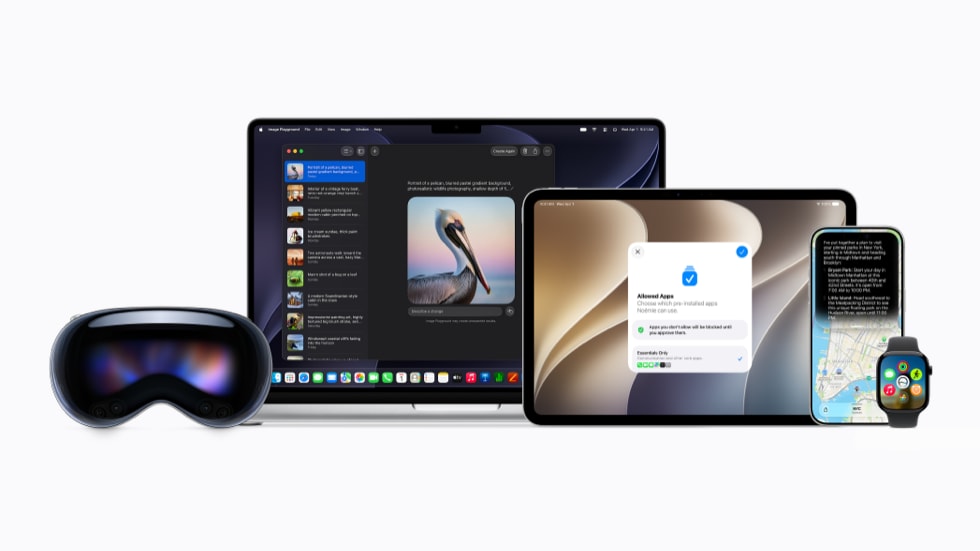
If you are reviewing a complex workflow document on your display, the orchestrator tracks the on-screen context, references your personal context history across Messages and Mail, and automatically decides which AI tools or models are required to help you. For the first time, this brings true Visual Intelligence straight to the Mac via dedicated keyboard shortcuts and to the iPad through the native screenshot interface. You can tap into the screen canvas, select a piece of data, and type directly to Siri AI to analyze, summarize, or move that information across separate applications entirely on autopilot, all while bypassing legacy server handshake delays.
2. Low-Latency Edge Mechanics: The Google Gemini Collaboration
Beyond its staggering visual interpretation depth, the June 2026 launch serves as a phenomenal showcase in flexible, hybrid model allocation. Running massive, multimodal transformer models locally on a consumer device typically hits a severe hardware wall, aggressively draining mobile batteries and causing noticeable system micro-stuttering under prolonged computational loads.
To shatter this thermal barrier, Apple’s overhauled architecture utilizes an intelligent, split-execution framework built in collaboration with Google’s foundation models.
The system executes core natural language processing, localized system actions, and high-fidelity dictation directly on the device’s hardware neural engine, pushing maximum fluid speeds without generating heat. However, when you drop an intensive request, such as generating photorealistic assets in the new Image Playground or executing complex multi-tier database queries—the System Orchestrator seamlessly shifts the load. It routes the heavy processing matrix out to Apple’s secure Private Cloud Compute servers or leverages Google Gemini’s immense multimodal backend. This hybrid approach ensures your tasks remain fluid and responsive, striking a flawless balance between local device efficiency and raw cloud computing power.
3. Writing Redefined: Systemwide Writing Assistance
Integrating a deeply intuitive artificial intelligence framework into your daily workflow changes how text is created and polished across an entire OS. Rather than forcing you to jump back and forth between your workspace and an external chat box, the new Siri AI embeds its writing tools virtually anywhere you can input text.
The system features real-time, automated proofreading and dynamic tone adjustments that adapt automatically to your specific communication history.
If you are typing an email to a senior manager, the model can automatically analyze the punctuation, structural complexity, and overall tone you typically use with that specific recipient to draft a flawless summary from scratch. It minimizes background friction by updating text strings directly inside native and third-party applications, letting creators focus entirely on the core ideas of their projects rather than spending hours fighting with manual proofreading loops.
4. The Privacy Barrier: Private Cloud Compute Safekeeping
For privacy advocates who have long resisted the integration of systemwide AI due to data logging concerns, the architectural safeguards unveiled at WWDC 2026 set an entirely new industry standard. The foundation models co-developed with Google operate behind a strict zero-knowledge wall whenever data moves beyond your physical device.
By utilizing Private Cloud Compute, your personal context indicators, screen data captures, and cross-app search requests are processed in completely isolated virtual environments.
The remote cloud servers exist solely to execute the immediate data processing request and are structurally incapable of indexing, caching, or storing your personal files for future training cycles. This meticulous level of security configuration ensures that your data footprint remains completely your own, establishing a robust trust barrier that allows professionals to leverage elite generative utilities without risking corporate data leaks or exposing personal identities to the web.
The Verdict: A Monumental Shift for Mobile Automation
The global unveiling of the next-generation Apple Intelligence and Siri AI platform is a historic turning point for the consumer technology landscape. By matching an organic, system-wide orchestrator with the multimodal muscle of Google Gemini and the absolute security of Private Cloud Compute, Apple has delivered an elite, privacy-first ecosystem that fundamentally redefines how humans interact with digital devices.
Pros
- Shocking Gemini Integration: Leverages world-class foundation models to execute complex, realistic text and image tasks flawlessly. MacRumors
- Profound On-Screen Awareness: System Orchestrator reads active user context to execute fluid, cross-app actions on autopilot. MacRumors
- Elite Privacy Infrastructure: Private Cloud Compute channels ensure your data is never cached, logged, or stored on external servers. MacRumors
- Systemwide Writing Utilities: Seamlessly drafts, rewrites, and proofreads text directly within native and third-party apps. TechCabal
Cons
- Strict Hardware Limitations: The massive processing demands of the local neural framework mean enhanced features require cutting-edge silicon.
- Usage Caps on Heavy Server Models: High-intensity generative features carry daily limits unless expanded via premium cloud subscription Tiers. Apple
To analyze the live developer API documentations, global software rollout phases, and official device compatibility matrices straight from the source, you can jump directly over to the official Apple Newsroom WWDC26 Announcement Hub to see how the next era of private, autonomous computing is unfolding!
What do you think?
Does the shocking collaboration with Google Gemini and the addition of system-wide on-screen awareness make the new Siri AI the ultimate undisputed king of mobile automation, or do you feel that relying on a hybrid cloud infrastructure still leaves the door open for server bottlenecks? Let us know your thoughts in the comment section below!