Razer Soma Chroma: The Best Immersive RGB Gaming Chair?
A technical analysis of Razer new Soma Chroma gaming chair introducing real time reactive illumination matrices for immersive gameplay loops.

The hardware engineering ecosystem has officially breached the perimeter of passive seating configurations, converting traditional ergonomic furniture into active telemetry-driven output arrays. Formally announced on June 25, 2026, the deployment of the Razer Soma Chroma marks the establishment of an entirely new production paradigm within the lifestyle brand’s peripheral lineup. Priced at an introductory threshold of $499 USD, the platform positions itself not merely as a mechanical seating support frame, but as a fully synchronized immersion node intended to unify environmental environmental aesthetics with live software compute states.
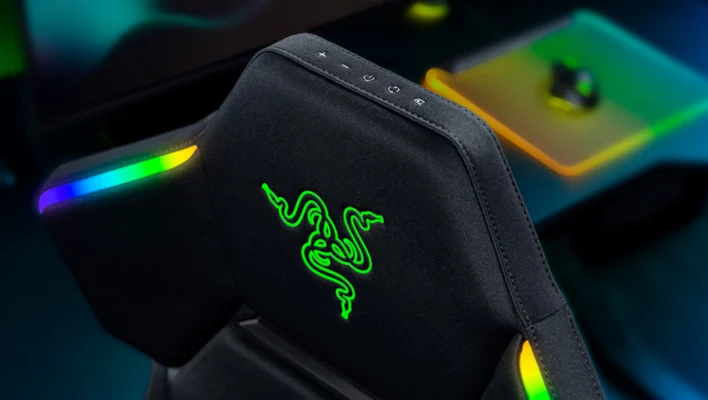
Historically, gaming-chair development has prioritised mechanical adjustment ranges, structural lumbar contours, and specialized upholstery textiles. The Soma Chroma shifts this trajectory entirely by integrating dedicated localized hardware microcontrollers and addressable RGB illumination zones directly inside the headrest architecture. By linking these physical emitter arrays to the established Razer Chroma runtime framework, the system bridges the gap between active digital gaming engines and real-world spatial lighting feedback systems.
Telemetry Synchronisation and the Active Chroma Integration
The primary technical milestone governing the Soma Chroma platform is its ability to bypass standard passive cyclic light profiles, replacing them with dynamic, software-triggered lighting sequences. Instead of relying on crude pixel-sampling algorithms that read screen borders with noticeable execution lag, the chair taps directly into the native telemetry pipelines of modern game engines.
At launch, the infrastructure supports native software profiles for over 300 active gaming titles, including high-velocity multiplayer environments like Overwatch, Marvel Rivals, and 007 First Light. This deep engineering integration alters how critical in-game milestones are conveyed to the user:
- State Change Realization: During standard execution cycles in competitive environments, the lighting zones remain fixed to structural utility colors indicating team states or baseline health reserves.
- Velocity Event Tracking: Upon the successful activation of high-tier player abilities—such as an ultimate payload deployment in Overwatch—the engine outputs a unique data package that causes the headrest emitters to rapidly flash or wave, creating instant environmental confirmation.
- Low-Latency Communication: The processing pipeline routes commands directly from the main processor down to the chair’s localized internal command bus, keeping latency figures safely under the 15-millisecond boundary to prevent visual mismatching.
Dual-Mode Power Topography and Cable Infrastructure Solutions
An immediate engineering problem introduced by integrating active electronic components into a rolling, 360-degree swiveling mechanical base is structural cable strain and rotational entanglement. Traditional tethering lines completely restrict mechanical motion, presenting a severe risk of wire shearing or port degradation when users rapidly rotate their setups during intense gameplay sessions.
To eliminate this physical limitation, the engineering division behind the Soma Chroma developed a highly flexible, dual-mode power distribution framework designed to accommodate different battlestation layouts:
For users who prioritize uninterrupted runtime metrics over raw physical mobility, the chair features a heavy-duty, reinforced power line that connects directly to standard AC wall outlets. However, for enthusiasts seeking an unconstrained spatial environment, the lower-back region of the chassis incorporates an isolated, dedicated storage pouch engineered to house external USB lithium-ion battery banks.
By offloading the primary power requirements onto portable energy storage modules, the chair operates completely free of external wire lines, allowing for full rotational flexibility without risking connectivity drops or physical cable damage.
Structural Metrics: Comparative Seating Architecture
To evaluate how the introduction of active electronic nodes impacts the core physical foundations of elite seating systems, the following matrix contrasts the design elements of the Soma Chroma against established legacy standards:
| Hardware Performance Group | Legacy Pro-Gaming Seating | Razer Soma Chroma Platform (2026) |
| Primary Integration Pathway | Completely Passive Mechanical | Active Software Engine Synchronization |
| Illumination Array Footprint | Non-Existent or Static Trim Accents | Lensed Headrest Addressable Emitters |
| Power Delivery Requirements | Zero Power Draw Required | Dual-Input Continuous AC or DC Battery Pouch |
| Core Cushion Compound | Molded Polyurethane Assemblies | Premium Cold-Cured High-Density Matrix |
| Lumbar Support Strategy | External Pillow or Static Contour | Integrated High-Velocity Adaptive Lumbar |
| Upholstery Tensile Rating | Standard Synthetic E-Leather | Reinforced Breathable Performance Weave |
Ergonomic Engineering and Mechanical Support Standards
While the active illumination components represent the primary marketing focus of the new line, long-term physical sustainability requires strict adherence to biomechanical support principles. The core seating platform uses a heavily reinforced, steel-backed internal frame wrapped inside a high-density, cold-cured foam compound. This specific foam formulation maximizes weight-distribution metrics, preventing premature material breakdown and sagging under continuous long-term seating compression.
The structural base relies on a high-grade Class 4 gas lift cylinder, providing smooth vertical movement and excellent resistance against rotational axial tilt degradation. The adjustable armrests feature complete multi-axis tracking adjustments, allowing users to fine-tune their horizontal spacing, vertical extension, and angular rotation to line up perfectly with their desks.
Furthermore, the integrated lumbar curve is built to match the natural alignment of the human spine, reducing lower-back fatigue during extended development sessions or competitive tournaments.
Industry Trajectory and the Future of Immersive Spaces
The release of the Soma Chroma points to a broader trend within the premium peripherals space: the transformation of static furniture into interactive hardware components. As consumer computing power climbs and software engines grow more advanced, hardware developers are looking beyond the monitor screen to expand the user’s immersion field.
By bringing localized illumination layers right into the user’s physical seating space, the platform paves the way for deeper environmental feedback systems. Future software updates could easily tie these chair emitters directly to ambient audio frequencies, structural spatial locating arrays, or real-time streaming health alerts, establishing the gaming chair as a central communication node in high-end desktop setups.
How do you view the technical transition toward active electronic components inside gaming chairs? Do you prefer a completely wire-free battery configuration, or do you find standard AC wall tethers more reliable for long-term daily use? Share your performance perspectives in the comment section below.
For complete mechanical assembly breakdowns, step-by-step guides for calibrating custom synapse lighting profiles, and direct comparisons with traditional ergonomics, check out the peripheral hardware guides over at forantech.com.
External News Sources:
- For the official corporate press release and direct pricing metrics from the global launch event, review the detailed coverage hosted on the Shacknews Product Announcement Bureau.
- For a comprehensive look at the upcoming hardware roadmap and newly revealed ecosystem additions, explore the official Razer Newsroom Media Registry.