OpenAI GPT-5.6 Sol: A New Controlled Release
A structural look at OpenAI’s layered safeguard stack, activation classifiers, and the multi-tier design of the GPT-5.6 series.

The intersection of state power and frontier artificial intelligence has reached a critical bottleneck. Following an explicit request from the United States federal government, OpenAI has officially paused its traditional immediate deployment protocols, opting instead for a highly restricted, staggered release phase for its newest flagship model, GPT-5.6 (“Sol”).
The regulatory intervention echoes a parallel enforcement action taken against Anthropic’s Mythos ecosystem, establishing a strict new precedent for how national security parameters dictate the distribution velocity of frontier Large Language Models (LLMs).
The Geopolitical Standoff Over Pre-Release Access
The friction between Silicon Valley deployment timelines and federal oversight highlights a changing geopolitical paradigm. OpenAI’s internal documentation reveals clear structural dissatisfaction with the forced delay, signaling an intense administrative struggle over who controls the public availability of highly capable neural networks.
The administrative intervention stems from specialized evaluations conducted on advanced infrastructure reasoning capabilities. Federal analysts flagged specific threat clusters within the model’s unsupervised processing layers—specifically its high-velocity code synthesis, autonomous vulnerability exploitation mechanics, and cross-domain data correlation capabilities—forcing a temporary clamp on wide-scale commercial API access.
Technical Specifications and Comparative Milestones
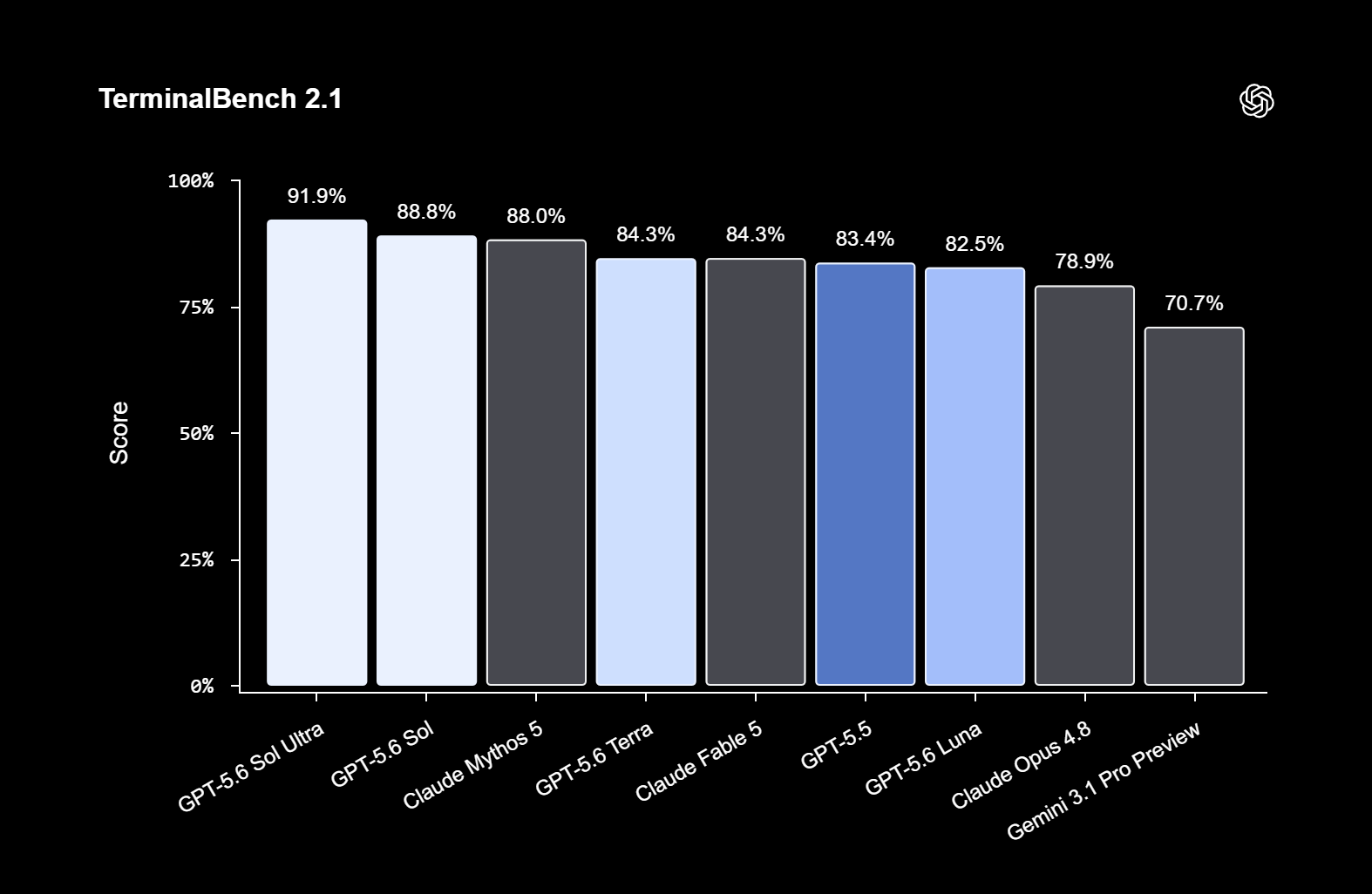
To understand why GPT-5.6 Sol triggered federal intervention frameworks, look at how the model scales alongside Anthropic’s recently restricted alternative:
| Architectural Vector | OpenAI GPT-5.6 Sol (Preview Phase) | Anthropic Mythos 5 (Restricted Rollout) |
| Primary Compute Focus | Long-horizon agentic task delegation | Multi-turn structural cyber-defense modeling |
| Context Window Capacity | 2.5 Million Tokens (Native Hardware Optimization) | 1.0 Million Tokens (Dynamic Memory Architecture) |
| Regulatory Status | Staggered Deployment (Under Federal Review) | Limited Rollout Resumed After Eased Restrictions |
| Core Processing Engine | Next-Gen Multi-Modal Agentic Topology | Deep Reasoning Inference Synthesis Engine |
| Inference Hardware Node | Broadcom “Jalapeño” Optimized Silicon Cores | Proprietary Enterprise Cloud Clusters |
1. The Proliferation of Agentic Architecture (Codex Evolution)
The regulatory panic surrounding GPT-5.6 Sol is directly tied to its native transition into Agentic AI. Traditional LLM interactions function within isolated, short-lived chatbot prompt loops. Sol, however, fundamentally shifts the unit of knowledge work by executing delegated, long-horizon tasks completely independent of continuous human prompt interventions.
Data released directly from OpenAI’s internal usage tracking confirms this structural shift. Within enterprise environments, token allocation has completely pivoted away from standard assistant chats toward autonomous Codex agents.
By May 2026, empirical tracking showed that 80.6% of active users had delegated tasks requiring greater than 30 minutes of human labor to these agents, while 25.6% initiated complex tasks that ran autonomously for over an hour. This capacity for multi-turn tool manipulation and independent problem-solving is precisely what prompted the government’s precautionary security holding pattern.
2. Advanced Hardware Optimization via the Jalapeño Initiative
Beneath the software layer, the physical scaling of GPT-5.6 Sol relies heavily on brand-new inference architecture. Coinciding with the model’s rollout, OpenAI and Broadcom officially unveiled their co-developed LLM-optimized inference chip, internally designated as “Jalapeño.”
- Sub-1 Nanometer Pipeline Simulation: The hardware layer leverages optimized silicon matrices designed to process high-density matrix math with minimal thermal expenditure.
- Reduced Memory Overheads: By embedding custom caching systems directly onto the silicon wafer, the Jalapeño chip mitigates the classic memory bandwidth bottleneck that typically limits massive context window processing.
- On-Chip Agentic Routing: The hardware features dedicated compute zones specifically designed to handle background agent loops, ensuring that long-running operations do not degrade concurrent user chat experiences.
The Strategic Assessment
Pros
- National Security Mitigation: Staggering the rollout provides a needed window for ethical hackers and defensive red-teams to discover, patch, and neutralize structural security vulnerabilities before wide-scale deployment.
- Optimized Enterprise Stability: Phased access protects cloud server infrastructure from immediate traffic spikes, ensuring stable token generation speeds for early adopters.
Cons
- Stifled Innovation Pacing: Artificial bottlenecks place Western development teams at a temporary disadvantage compared to unrestricted open-weight global developments (such as China’s recent GLM iterations).
- Corporate Operational Friction: Fractured rollout paths create massive business uncertainty for enterprise developers trying to build commercial software atop the new API layers.
How do you view the growing trend of federal governments directly intervening to slow down and regulate the commercial release dates of next-generation AI models? Let us know your perspective in the comments section below.
For complete developer document access, live tracking of token pricing metrics, and continuous reporting on upcoming enterprise feature drops, explore the extensive digital tech databases at forantech.com.
Source Reference: The Guardian Technology Bureau Official Report