MSI Claw 8 EX AI+: 5 Reasons This Shocking New Handheld Changes Everything
MSI officially disrupted Computex 2026, unleashing the aggressive Void Purple Claw 8 EX AI+ to seize the handheld gaming crown.

The global race for portable PC supremacy has officially taken a chaotic, hyper-aggressive turn. For the last couple of years, hardware manufacturers have been comfortably repeating the exact same design playbook. Enthusiasts looking for a premium portable machine were essentially forced to accept a predictable compromise: you either opted for an efficient custom operating system layer, or you chose a raw Windows 11 machine that felt like a clunky laptop motherboard stuffed inside a plastic controller shell.
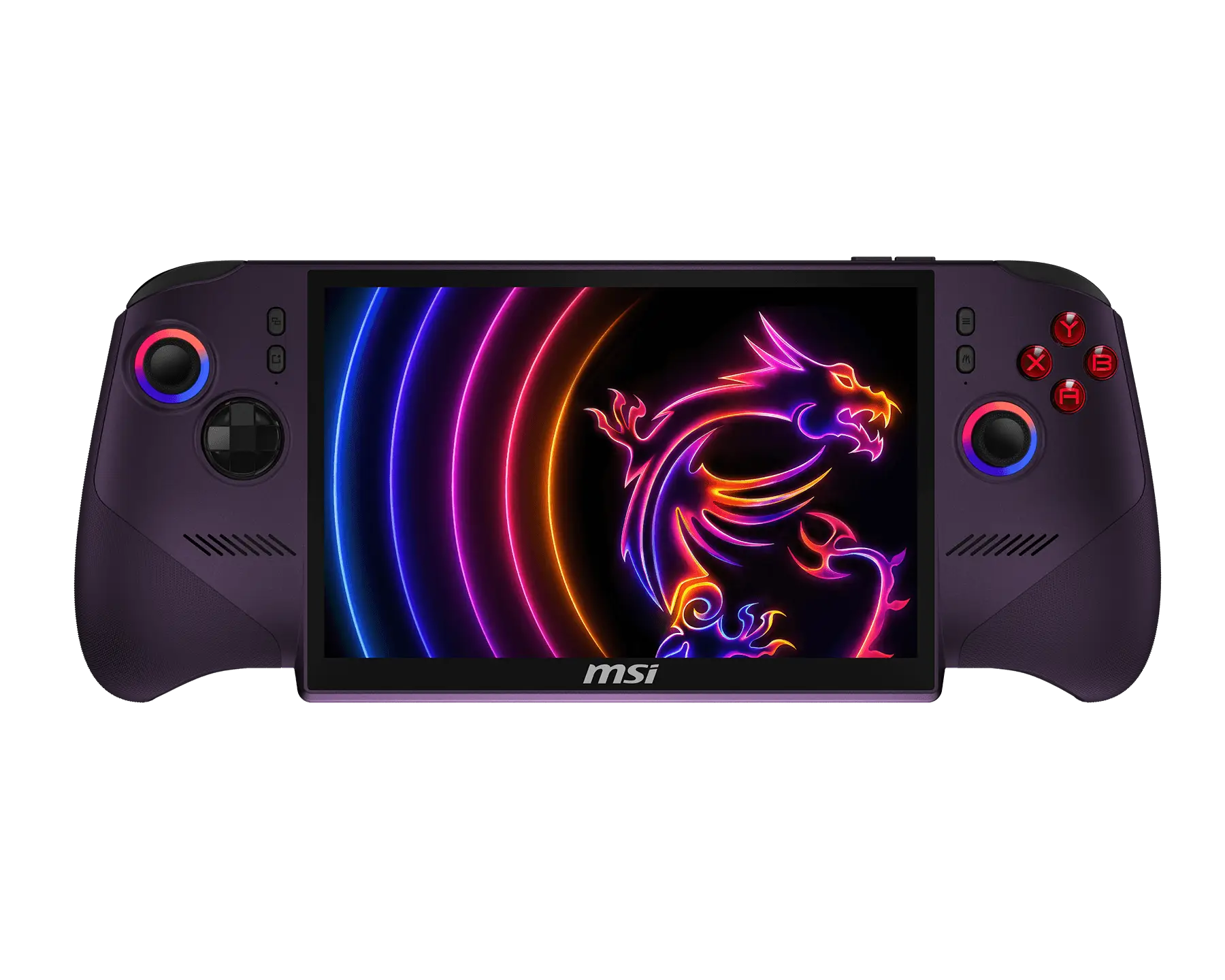
On June 1, 2026, MSI entirely threw out the old rulebook. Taking the floor by storm at Computex 2026 in Taipei, the hardware giant officially debuted the MSI Claw 8 EX AI+ (Model: CG3EM).
Drenched in a bold, cheeky “Void Purple” aesthetic, this device isn’t just a minor mid-generation refresh. It is a ferocious, unapologetic declaration of war against the established handheld market. By serving as the global launch vehicle for Intel’s first-ever, ground-up dedicated portable processor, this handheld completely rewrites the relationship between mobile thermal profiles and elite graphical frame rates. Let’s lift the lid on this newly unveiled monster to see how the physical hardware matches up to its bold claims.
Technical Specifications: The Claw 8 EX AI+ Blueprint
To truly comprehend how heavily MSI has re-engineered its portable platform, we can break down the exact hardware array shipping inside the Void Purple chassis:
| Hardware Subsystem | Factory Configuration Profile | Real-World Operational Impact |
| Processor Silicon | Intel Arc G3 Extreme (“Panther Lake” Core Architecture) | Halves laptop core overhead to maximize mobile thermal space |
| Integrated Graphics | Intel Arc GPU B390 (12 Xe3 Graphics Cores) | Native hardware ray tracing and elite XeSS 3 generation loops |
| Display Matrix | 8-Inch FHD+ IPS-Level Display (1920 x 1200 Resolution) | Variable Refresh Rate (48Hz to 120Hz VRR) for zero screen tearing |
| Memory Capacity | Up to 32GB Dual-Channel LPDDR5x (Onboard) | Eradicates data chokepoints during complex background computing |
| Battery Reservoir | 4-Cell Li-Polymer (Massive 80Whr Capacity) | Doubles the endurance limits of original sub-40Whr handheld designs |
| Tactile Controls | Full Hall-Effect Joysticks & Magnetic Precision Triggers | Completely eliminates drift wear while offering pixel-perfect tracking |
1. Ground-Up Silicon: The Arc G3 Extreme Powerhouses
Historically, every Windows-based portable device on the market suffered from a fundamental engineering shortcut: manufacturers simply down-clocked a standard laptop chip, shoved it into a smaller frame, and hoped the cooling fans could keep up with the heat. This frequently resulted in severe thermal throttling, where your device would suddenly drop frames to avoid melting your hands.
The Arc G3 Extreme represents the first time Intel has built silicon strictly for the unique realities of handheld gaming. By halving the traditional laptop performance core count down to two, and backing them up with eight dedicated efficiency cores, Intel created a chip that sips power between 8 to 35 watts.
The graphical results are staggering. The integrated Arc B390 graphics processing engine contains 12 cutting-edge Xe3 cores. In real-world performance metrics tracked live on the Computex show floor, this targeted architecture delivers up to a 44% raw performance jump over standard legacy mobile architectures at 1080p.
2. Eradicating Input Lag via XeSS 3 and Advanced Haptics
Raw frame rates don’t mean much if the actual feeling of controlling your character feels mushy or unresponsive. To combat the tracking delays that frequently ruin high-velocity action sequences, MSI has combined deep software optimization with premier physical tracking components.
The Claw 8 EX AI+ fully integrates Intel’s new XeSS 3 software stack, which deploys an advanced Xe Low Latency engine directly into game render pipelines. This matches the instantaneous responsiveness that enthusiasts expect from premium desktop hardware setups.
If you have spent any time evaluating the hyper-responsive tracking matrix outlined in our comprehensive SteamOS 3.8.6 System Architecture Analysis, you know that sub-millisecond input registration is the boundary line between an immersive session and absolute frustration. MSI takes this further by introducing an ultra-high-end linear motor that actively simulates tactile physical textures through the chassis grips.
3. Demolishing the Windows 11 Desktop Clutter
The biggest headache plaguing premium Windows-based handhelds has always been the operating system user interface itself. Trying to navigate microscopic windows dropdown bars or system control panels using a tiny analog thumbstick is an absolute nightmare.
To bypass this friction point, the Claw 8 EX AI+ launches with a deeply integrated, full-screen Xbox Mode layout running natively over the Windows 11 core. The moment you tap the power button, the desktop environment disappears entirely, replaced by a clean, console-style dashboard that houses all your active game launchers (Steam, Epic, Game Pass) under a single controller-friendly banner.
This level of software polishing ensures that power management, performance optimization profiles, and game organization happen cleanly with zero tedious background mapping. This unified approach mirrors what we have come to love about elite desktop interfaces; for instance, you can look closely at our ASUS ROG Strix Scar 18 Performance Review to see how a polished, dedicated control software ecosystem maximizes your actual in-game efficiency.
4. Acoustic Purity: Dual-Pass Sound Architecture
When you are playing an expansive, open-world title on the go, building a broad, convincing soundstage is vital to keeping you immersed in the environment. MSI has equipped the Claw 8 EX AI+ with front-firing 2W stereo speakers backed by full DTS Audio Processing pipelines. The sound profile remains remarkably crisp, accurately separating low-frequency mechanical rumbles from crisp, high-frequency atmospheric details without distorting at maximum volume levels.
This level of audio fidelity is a massive deal for competitive tracking. If you’ve read our evaluation of acoustic tuning parameters inside the Logitech G Pro X 2 Lightspeed review, you know that spatial clarity can alter how you interact with a virtual world. The Claw ensures that even without a heavy headset clamped over your ears, you can easily place sound vectors clearly across your immediate physical space.
5. The Multi-Generational Display Leap
Staring at the gorgeous 8-inch 120Hz Variable Refresh Rate panel on the Claw highlights just how beautifully the mobile screen space has evolved over the past decade. Older portable screens were notoriously muddy, suffering from horrific ghosting lines and locked 60Hz parameters that made high-velocity panning shots look incredibly jittery.
We can chart this historical engineering jump clearly by tracking old-school mobile panel layouts; looking back at our classic LG G6 Display Review reveals how far mobile brightness levels, color gamuts, and refresh pacing have progressed. The Claw’s ability to seamlessly scale its refresh rates between 48Hz and 120Hz on the fly ensures that even if your frame rate dips slightly during an intense explosion, the physical display panel perfectly matches the output, keeping your gameplay smooth.
The Verdict: Has MSI Claimed the Portable Crown?
The MSI Claw 8 EX AI+ is a massive, incredibly cheeky step forward for mobile PC enthusiasts. By being the first to deploy Intel’s dedicated handheld-first silicon architecture, MSI has effectively erased the thermal problems of the past.
Pros
- True Handheld Silicon: Arc G3 Extreme chip offers spectacular performance-per-watt efficiency.
- Immense Battery: Massive 80Whr reservoir provides genuine longevity on the move.
- Zero-Drift Sticks: Full Hall-effect inputs ensure permanent physical accuracy.
- Polished Interface: Full Xbox Mode dashboard cleans up the Windows 11 clunkiness.
Cons
- Chassis Weight: Dropping an 80Whr battery into the frame elevates total physical weight to 785 grams.
- Premium Pricing Rumors: Bleeding-edge architecture means this device won’t come cheap at retail.
For further official live hardware announcements, benchmark tracking logs, and deep-dive engineering updates direct from the exhibition floor, check out the official MSI Global News Portal to see how the next phase of portable gaming is unfolding!
What do you think?
Would you rock the cheeky Void Purple look to get access to Intel’s dedicated handheld silicon, or do you prefer sticking to traditional black and white frames? Let us know your thoughts in the comment section below!