ASUS ROG Astral RTX 5090: The New Graphics King
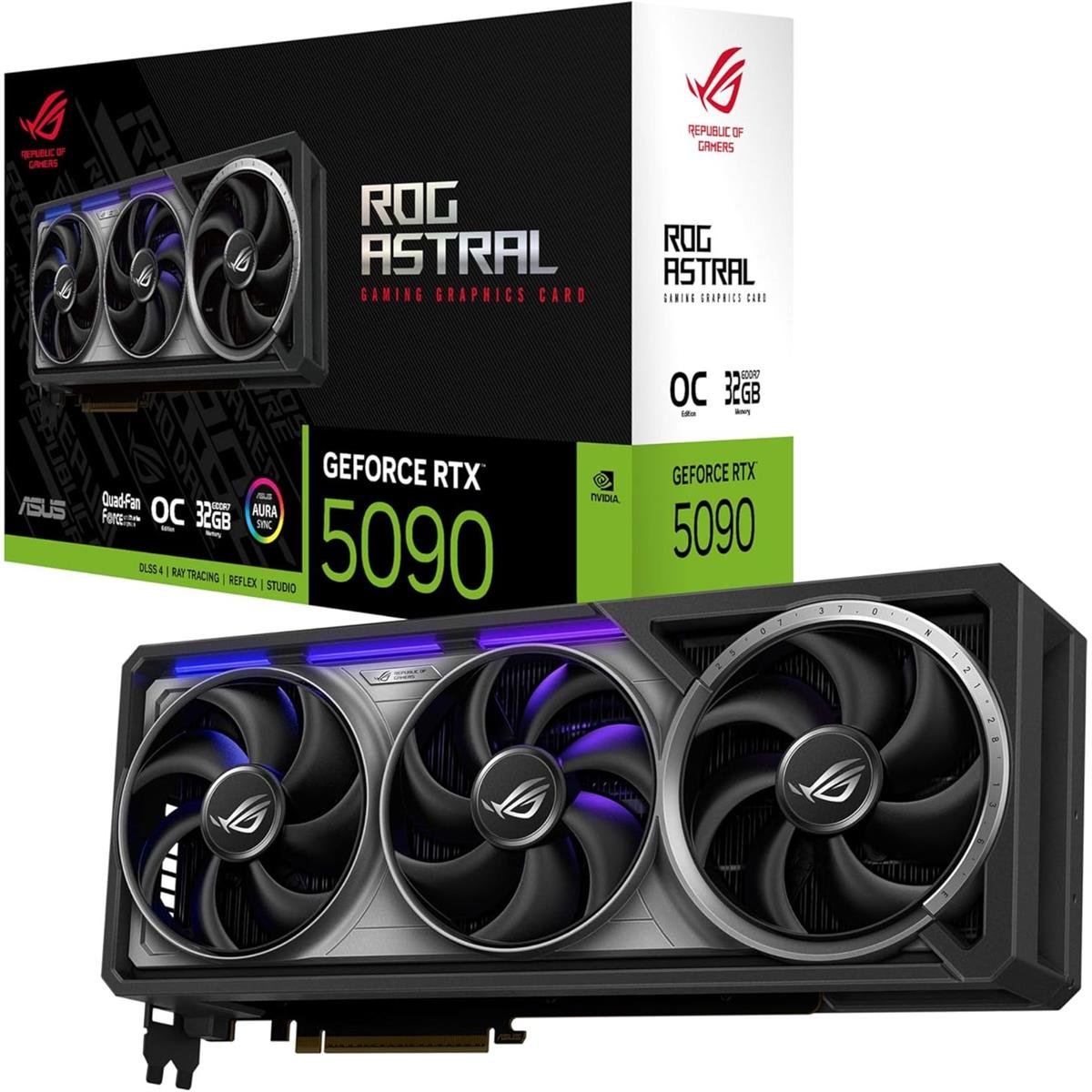
The newly unveiled ASUS ROG Astral RTX 5090 Edition 20 graphics card sets a staggering benchmark for extreme desktop performance enthusiasts.

The desktop graphics card market has officially reached a historic milestone with the rollout of the most powerful hardware iteration yet seen in the custom PC space. ASUS has formally unveiled its absolute crown jewel for the current generation: the ASUS ROG Astral RTX 5090 Edition 20. This monstrous enthusiast-tier desktop card is not a minor refresh of old frameworks; it is a fundamental reimagining of absolute gaming and local AI processing power.
Designed to push the absolute limits of the groundbreaking NVIDIA Blackwell architecture, the Astral lineup is engineered to solve the immense thermal, structural, and power delivery issues that accompany modern top-tier consumer GPUs. As visual computing continues to transition toward full path-tracing pipelines, massive unified memory pools, and local large language models (LLMs), the requirements on custom board partners have skyrocketed. ASUS answers this challenge directly by deploying a bespoke design that balances extreme aesthetics with uncompromising hardware reliability.
Silicon Architecture: Deep Inside the Blackwell Core Frame
At the absolute center of this graphics card sits a highly tuned custom variation of NVIDIA’s premier consumer silicon core. The specifications of this custom layout reflect a stunning jump in absolute computing density compared to its predecessors.
The incorporation of next-generation GDDR7 high-speed memory running over a massive 512-bit memory interface yields unprecedented memory bandwidth numbers. This throughput is vital for handling massive, uncompressed 12K production assets, compiling complex unreal game engine spaces, or rendering high-frame-rate path-traced environments in real-time.
The Hybrid Vapor Chamber Engineering Marvel
As board power requirements scale up to maximize architectural performance, managing extreme thermal limits becomes paramount. To prevent any chance of heavy thermal drop-offs, ASUS has abandoned standard flat metal copper cold plates, choosing to debut their new proprietary Hybrid Astral Vapor Fluid Chamber Engine.
Dual-Phase Thermal Interconnect Mechanics
This thermal structure directly covers the massive central GPU core die and the surrounding GDDR7 memory blocks. Inside this highly sealed vacuum chamber sits a multi-layered, microscopic capillary structure filled with a specialized low-boiling-point working fluid. When localized hotspots emit immense thermal energy, the fluid instantly vaporizes, transferring latent heat outward toward structural aluminum fin towers.
Transverse Axial-Tech Airflow Pumping
To push massive quantities of air through these dense fins, the card implements custom dual-axis magnetic levitation fan fins. These premium fans offer:
- A 21% increase in static air pressure over standard ROG Strix designs.
- A notable noise reduction of up to 4.5 decibels under intense synthetic rendering tests.
- An completely friction-free structural axis that ensures extended operational lifetimes.
Benchmark Metrics: Path Tracing and Local Large Language Model Dominance
The raw, real-world utility of this premium enthusiast graphics card extends far beyond basic frame rate improvements in old rasterized software titles. It is a dual-threat powerhouse built for extreme enthusiasts and heavy creator stacks alike.
AAA Gaming At 1440p and Native 4K 144Hz
When put through intense modern AAA path-traced titles using DLSS 4.5 and advanced Ray Reconstruction algorithms, the GPU remains completely unbothered. It routinely pushes over 100 frames per second at full native resolutions with maximum illumination metrics turned on. The presentation of ray-traced reflections, accurate physics-based global illumination, and high-fidelity shadow calculations are processed effortlessly by the onboard hardware.
Enterprise and Local Creator AI Deployments
For local AI developers, machine learning programmers, and custom content creators, the 32GB memory pool provides an incredible playground. It allows users to:
- Run massively detailed 120-Billion parameter large language models completely locally without utilizing remote cloud computing platforms.
- Leverage fifth-generation Tensor precision pipelines to train custom machine learning sets in less than half the time of previous enterprise cards.
- Render enormous 3D environments exceeding 90GB in memory requirements within popular design environments without experiencing out-of-memory errors.
Structural Integrity: Eliminating PCB Sag with Armor Frame 3.0
A frequent complaint against massive enthusiast-grade graphics cards is their sheer weight, which often leads to structural bending or damage to motherboard PCIe slots over time. ASUS completely addresses this concern through an industrial-grade structural solution.
The entire graphics card is housed inside a high-strength, die-cast aluminum exoskeleton frame labeled Armor Frame 3.0. This solid inner frame bolts directly into your PC’s expansion chassis brackets, creating a rigid support structure that completely eliminates card twisting or sagging without requiring awkward vertical external support stands.
Final Review: An Uncompromised Powerhouse for the Elite Enthusiast
The rollout of the new Astral design proves that ASUS still understands exactly how to dominate the enthusiast component landscape. By combining bleeding-edge GDDR7 memory speeds with a revolutionary dual-phase vapor chamber and unmatched structural rigidity, they have built a legendary graphics card. It stands as an absolute masterpiece of modern desktop hardware engineering.