Is the ASUS ROG Ally X the Ultimate Handheld PC?
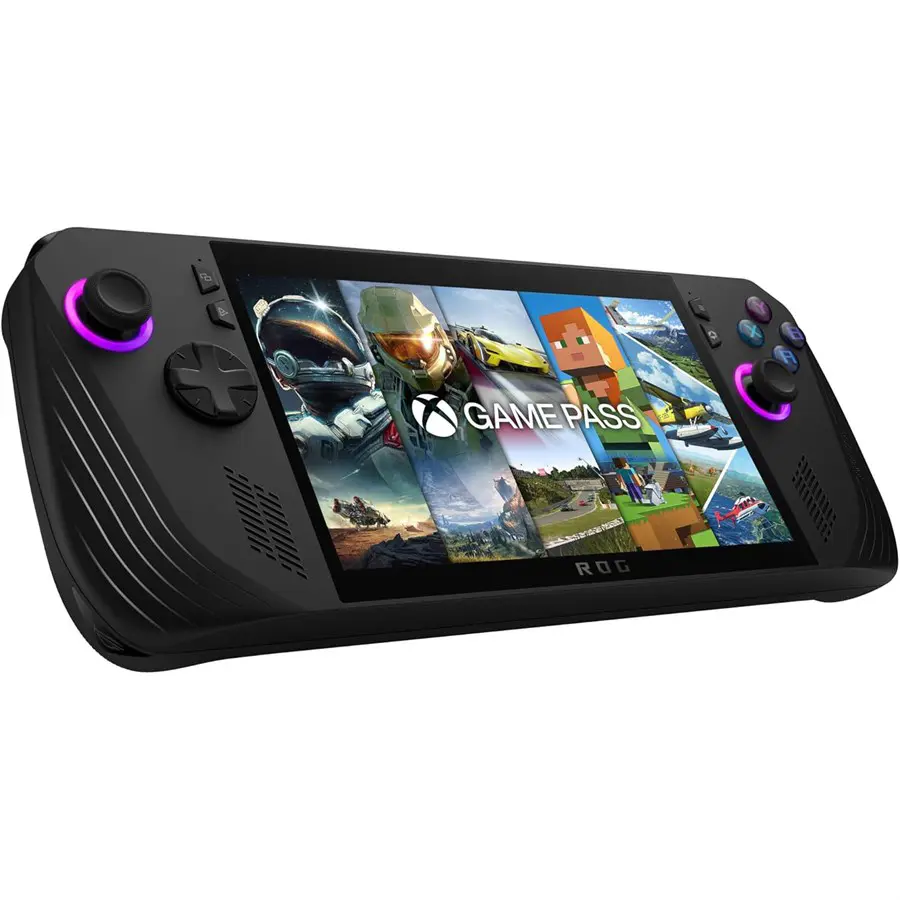
The ASUS ROG Ally X revolutionizes handheld gaming with a massive 80Wh battery, 24GB RAM, and refined modern ergonomic design.

Image Credits: czone
For decades, PC gaming demanded a rigid compromise: tether yourself to a desk with a massive desktop rig, or carry a heavy laptop that runs loud and hot. The arrival of x86 handheld gaming PCs broke that paradigm, but early iterations were hampered by crippling battery life, thermal throttling, and unrefined ergonomic hardware.
The ASUS ROG Ally X represents a definitive turning point for mobile PC gaming. Rather than treating the handheld format as a novelty, ASUS overhauled the structural, thermal, and electronic architecture of its predecessor to set a high benchmark for portable performance.
Ergonomics and Chassis Engineering: Ergonomic Refinement
While the original ROG Ally featured a striking white aesthetic, its flat back grips and sharp edges caused hand fatigue during extended play. The ROG Ally X introduces an all-black chassis crafted with deeper, rounded handgrips and subtle texturing along the contact surfaces.
Key Hardware Refinements
- Re-angled Face Buttons and Joysticks: The ABXY buttons feature a revised dome switch structure rated for 5 million cycles, offering tactile actuation with reduced friction. The analog sticks are repositioned closer to the top rim for natural thumb positioning.
- Tighter Joystick Tension: Tension has been increased to 5g force, matching traditional home console controllers for precise aiming in first-person shooters.
- Precision Precision D-Pad: The eight-way directional pad uses a stiffer cross-switch layout that minimizes accidental diagonal inputs in fighting games and retro titles.
- Ergonomic Back Triggers: The macro buttons ($M_1$ and $M_2$) on the rear chassis have been redesigned into smaller, recessed tabs to prevent unintended presses during intense gameplay.
Silicon and Power Architecture: Massive Battery & Memory Upgrade
At the core of the ROG Ally X is AMD’s Ryzen Z1 Extreme processor—an APU built on TSMC’s 4nm process, combining 8 Zen 4 CPU cores (16 threads) with 12 RDNA 3 Compute Units. However, raw compute performance means little if a system runs out of power or starves its unified graphics pipeline of memory bandwidth.
Addressing the Memory Bottleneck
Earlier handheld devices allocated a shared pool of 16GB LPDDR5 memory between system RAM and video memory (VRAM). Modern AAA games like Cyberpunk 2077, Alan Wake 2, and Hogwarts Legacy routinely demand 6GB to 8GB of VRAM alone at 1080p, leaving system RAM constrained and triggering stuttering frametimes.
The ROG Ally X addresses this by equipping 24GB of LPDDR5X-7500 RAM running in dual-channel mode. Users can allocate a full 8GB directly to VRAM while retaining 16GB of system RAM for operating system overhead and background processes. Furthermore, the speed upgrade to 7500 MT/s boosts memory bandwidth, directly scaling memory-bound frame rates in RDNA 3 graphics execution.
The 80Wh Power Revolution
Battery life has historically been the heel of portable x86 machines. Where first-generation handhelds packed modest 40Wh batteries that drained within 45 to 60 minutes at high TDP, ASUS managed to double the battery capacity in the ROG Ally X to 80Wh without adding significant weight or thickness.
By keeping the total system weight under 678 grams while doubling power storage, the ROG Ally X delivers 3 to 4 hours of continuous gameplay in demanding AAA games, and up to 8 hours in low-TDP indie games and emulation.
Hardware Specifications Matrix
The structural changes beneath the hood distinguish the ROG Ally X from earlier handheld iterations:
| Specification | ASUS ROG Ally (Original) | ASUS ROG Ally X (2024–2026 Platform) | Valve Steam Deck OLED |
| Processor (APU) | AMD Ryzen Z1 Extreme (Zen 4, 8C/16T) | AMD Ryzen Z1 Extreme (Zen 4, 8C/16T) | Custom AMD APU (Zen 2, 4C/8T) |
| Graphics Compute Units | 12 RDNA 3 CUs @ 2.7 GHz | 12 RDNA 3 CUs @ 2.7 GHz | 8 RDNA 2 CUs @ 1.6 GHz |
| System Memory | 16GB LPDDR5-6400 | 24GB LPDDR5X-7500 | 16GB LPDDR5-6400 |
| Storage Standard | M.2 2230 NVMe SSD (Up to 512GB) | M.2 2280 NVMe PCIe 4.0 (Up to 1TB/4TB support) | M.2 2230 NVMe SSD (Up to 1TB) |
| Battery Capacity | 40 Wh | 80 Wh | 50 Wh |
| Display Panel | 7″ 1080p 120Hz IPS LCD (VRR) | 7″ 1080p 120Hz IPS LCD (VRR, FreeSync) | 7.4″ 800p 90Hz HDR OLED |
| TDP Operating Modes | 10W / 15W / 25W (30W Turbo Plugged) | 10W / 15W / 25W (30W Turbo Plugged) | 4W – 15W Adjustable |
| External I/O Ports | 1x ROG XG Mobile Interface, 1x USB-C 3.2 | 1x USB4 (40Gbps, eGPU support), 1x USB-C 3.2 | 1x USB-C 3.2 Gen 2 |
| Total Weight | 608 g | 678 g | 640 g |
Thermal Dissipation Architecture: Zero Gravity 2.0
Higher memory frequencies and sustained 25W/30W TDP modes generate thermal load. Cooling this component density within a hand-held shell required an overhaul of the internal thermal loop.
Cooling Upgrades
- Fluid-Dynamic Bearing Fans: The cooling assembly uses two newly designed fans that are 24% smaller in volume, with 50% thinner blades. Despite their smaller footprint, they increase overall airflow through the chassis by 24%.
- Dedicated Screen Cooling Channel: A third exhaust air duct directs a stream of cool air between the back of the motherboard and the screen module. This keeps the touchscreen panel cool to the touch during long sessions and lowers internal surface temperatures by up to $6^\circ\text{C}$.
- Standard M.2 2280 Form Factor Slot: By rearranging motherboard components, ASUS replaced the restrictive M.2 2230 SSD slot with a standard full-length M.2 2280 slot featuring a dedicated copper heat spreader. This allows users to upgrade their storage using standard, cost-effective M.2 drives up to 4TB or 8TB without thermal throttling.
Display Fidelity and Motion Handling: Variable Refresh Rate Supremacy
While OLED displays excel at deep black levels, the ROG Ally X retains a 7-inch 1080p IPS panel with Variable Refresh Rate (VRR) via AMD FreeSync Premium. VRR remains an important feature for handheld gaming PCs running demanding AAA titles.
The VRR Advantage
In modern games, handheld frame rates fluctuate between 40 FPS and 55 FPS. On fixed refresh rate screens, dropping below 60 FPS causes noticeable screen tearing or heavy judder when V-Sync forces the frame rate to drop to half-steps (e.g., 30 FPS).
With AMD FreeSync Premium operating across a 48Hz–120Hz range (with Low Framerate Compensation expanding below 48Hz), the display panel hardware synchronizes its refresh rate to the exact moment the GPU presents a frame. This makes a game running at 42 FPS feel smooth and responsive, extending the perceived playability of heavy titles.
Software Infrastructure: Armoury Crate SE 1.5 & Windows 11
The ultimate hardware setup is only as good as its user interface. Operating on native Windows 11 Home, the ROG Ally X offers wide compatibility out of the box—native support for Xbox Game Pass, Steam, Epic Games Store, GOG, EA App, and Ubisoft Connect without relying on compatibility layers.
Software Features in Armoury Crate SE 1.5
- Custom Command Center: Gamers can toggle power profiles (Silent 10W, Performance 15W, Turbo 25W), change resolutions between 720p, 900p, and 1080p, cap frame rates, and turn on AMD Fluid Motion Frames (AFMF) with a single button press.
- Per-Game Control Profiles: Key assignments, gyro sensitivity parameters, and dead-zone curves can be customized and bound automatically to individual games in your library.
- Seamless USB-C Docking: Replacing the proprietary XG Mobile port with a universal USB4 port (40Gbps) allows the ROG Ally X to plug into standard external GPUs (eGPUs), high-speed external SSDs, and 4K desktop docks over a single cable.
The Broader Market Impact and Verdict
The ASUS ROG Ally X resolves key pain points of first-generation handheld PCs. By doubling battery capacity to 80Wh, expanding system memory to 24GB LPDDR5X, adopting universal M.2 2280 SSD drives, and switching to high-speed USB4, it delivers a refined portable PC gaming experience.
For enthusiasts seeking high-performance x86 gaming on the go, the ROG Ally X sets a high standard for thermal design, endurance, and hardware flexibility.