Ego on the Field: Will the Live-Action Blue Lock Movie Capture the Manga’s Psychological Edge?
A massive 2-hour cinematic gamble tests whether Jinpachi Ego's ruthless striker experiment can survive the leap to real-world soccer cinema.

Image Credits: Crunchyroll
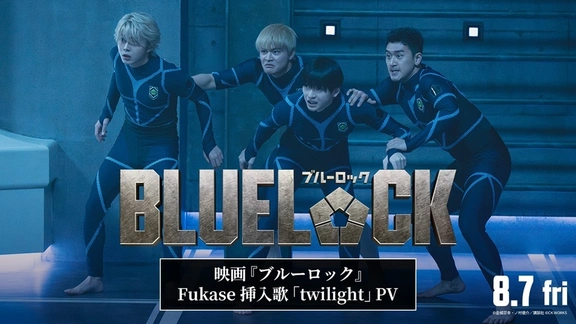
The global anime and manga landscape thrives on adaptations, but few announcements have sparked as much intense debate or outright skepticism as the upcoming Blue Lock live-action movie. Scheduled to premiere in Japan on August 7, 2026, the cinematic project introduces a massive narrative hurdle: translating Muneyuki Kaneshiro’s hyper-stylized, psychologically intense sports thriller into a realistic, live-action environment. Produced by CREDEUS (celebrated for their spectacular handling of the Kingdom and Golden Kamuy live-action films) and distributed by TOHO, the project has officially locked in a runtime of 2 hours and 8 minutes.
But can real-world actors, real-time physics, and practical special effects truly capture the visual madness of “weapon systems,” aura manifestations, and the absolute destruction of a high school player’s sports career?
For readers keeping up with Japanese entertainment, gaming, and pop-culture trends over at ForanTech, the adaptation represents a critical cross-road for anime translations. Capturing the explosive, fluid energy of sports on screen is notoriously tricky, multiply that by the dark, high-stakes psychological warfare of the Blue Lock facility, and the task becomes downright monstrous. The film isn’t merely attempting to recreate a game of soccer; it is trying to capture a dystopian gladiator arena where teamwork is treated as a disease and pure, unadulterated selfishness is hailed as the ultimate virtue.
The Plot and Runtime Constraints: The First Selection Bottleneck
One of the most immediate concerns echoing across the community regards the narrative scope. A total runtime of 128 minutes provides a healthy cinematic window, but Blue Lock’s introductory arcs are incredibly dense. Production updates indicate that the film will focus squarely on the First Selection arc, introducing the high-stakes survival matrix where 300 young strikers are systematically split into blocks and whittled down.
Condensing Team Z’s evolution, internal betrayals, and massive multi-stage matches into just over two hours requires surgical screenwriting precision. Director Yūsuke Taki and screenwriter Tetsuo Kamata face the immense challenge of pacing the story so that characters like Yoichi Isagi have room to logically develop their “spatial awareness” and “smell of a goal” without the film feeling like a rushed montage.
The narrative must balance complex character backstories, such as Chigiri’s debilitating fear of re-injuring his knee, while ensuring the soccer matches themselves feel kinetic, intense, and distinct from one another. The First Selection is fundamentally a story about finding one’s unique identity under extreme pressure, meaning the film cannot afford to let the sports action overshadow the psychological transformations taking place in the locker rooms and training fields.
Analyzing the Star-Studded Cast Matrix
To carry the immense emotional and physical weight of these distinct characters, the production has assembled a massive ensemble cast of top-tier young Japanese talent. Each actor faces the unique challenge of embodying characters defined by their extreme, often borderline psychotic, passion for the sport.
| Character | Actor | Key Challenge for Live Action |
| Yoichi Isagi | Fumiya Takahashi | Transitioning from a passive player to a deeply unhinged, adaptable egoist. |
| Meguru Bachira | Kaito Sakurai | Portraying his erratic, playful, yet terrifyingly fluid “monster” dribbling style. |
| Hyoma Chigiri | Kyōhei Takahashi | Capturing the explosive, blistering speed of a 5.77-second 50-meter dash. |
| Seishiro Nagi | K (from &TEAM) | Executing jaw-dropping, gravity-defying, unnatural ball traps convincingly. |
| Jinpachi Ego | Masataka Kubota | Maintaining the unnerving, lanky, hyper-cynical charisma of the mastermind. |
The inclusion of high-profile names, such as pop idol K from the global group &TEAM as the lazy genius Seishiro Nagi and Keito Tsuna as his wealthy counterpart Reo Mikage, proves that the studio is targeting both die-hard manga enthusiasts and mainstream audiences. The dynamic between Nagi and Reo will be a major emotional pillar of the film’s second half, requiring genuine chemistry to make their eventual tactical split truly devastating.
Furthermore, veteran actor Masataka Kubota playing Jinpachi Ego provides a brilliant anchoring point for the film’s darker, more philosophical elements. Kubota, known for his masterful portrayal of intense, eccentric characters, is perfectly suited to deliver Ego’s lengthy, cynical monologues about the failures of modern Japanese soccer without losing the audience’s attention.
The Visual Dilemma: Translating “Anime Physics” to the Big Screen
The defining characteristic of Blue Lock isn’t just the tactical soccer; it’s the intense, monstrous visual metaphors. When a player taps into their “ego,” the manga draws literal chains snapping, fire erupting from their eyes, or dark, shadowy auras devouring the field.
The CGI Challenge: If the visual effects team leans too heavily into cartoonish CGI, the film risks looking campy and losing its grit. If they strip away the internal visual monologues entirely, it risks becoming a generic sports movie.
CREDEUS has already proven their capability with integrating digital elements into rough, practical landscapes, but rendering Nagi’s two-stage fake volleys or Barou’s aggressive, muscle-bound physical charges requires specialized sports choreography. To ensure the action looks authentic, the production reportedly hired professional Japanese J-League youth players to serve as stunt doubles and consultants.
The cinematography utilizes high-speed Phantom cameras and complex wirework to capture the exact micro-seconds of a ball striking a boot or a defender getting out-maneuvered in mid-air. The visual team must emphasize the chaotic claustrophobia of the Blue Lock indoor training grounds—concrete walls, steel doors, and neon lighting, while retaining the vast, predatory nature of the open field.
Ado Joins the Egoist Ranks
Adding a massive layer of high-octane energy to the presentation, global Japanese music sensation Ado has been officially confirmed to perform the movie’s main theme song. Known for her incredibly raw, powerful, and versatile vocals, Ado’s musical aesthetic fits perfectly with the fiercely aggressive spirit of Blue Lock. Her track will undoubtedly serve as the sonic backdrop for the film’s most intense, high-stakes tactical plays, elevating the theatrical experience to a fever pitch during the movie’s final act.
Production Pipeline & Creative Team
To appreciate the scale of this project, it helps to look at the timeline and structural hierarchy driving the feature film toward its imminent summer release:
Project Announcement
Early 2026
Official confirmation of the live-action project by TOHO and CREDEUS, locking in the primary production crew and securing the rights from Kodansha.
Visual Teasers & Main Cast Reveal
Spring 2026
Character posters featuring Fumiya Takahashi and Kaito Sakurai drop, generating massive social media buzz and setting expectations for the uniform designs.
Supporting Cast & Theme Song Drop
June 2026
Official announcement of Ado’s theme song attachment and the casting of the rival teams, including Team W’s Wanima twins.
Theatrical Premiere
August 7, 2026
The film debuts across major IMAX and standard theaters in Japan, with fans eagerly eyeing global streaming details.
Final Verdict: Can It Break the Live-Action Anime Curse?
Historically, live-action anime adaptations have faced a treacherous uphill battle, often stumbling when trying to translate over-the-top animation into live cinema. However, recent industry shifts, such as Netflix’s successful One Piece series or theatrical blockbusters like the Kingdom trilogy, prove that when a creative team respects the core thematic heart of the source material rather than just copying its surface aesthetics, magic can happen.
Blue Lock’s transition succeeds or fails based on one core element: Ego. The film cannot afford to be a safe, heartwarming story about friendship and perseverance, because the source material explicitly rejects those concepts. If the film manages to capture the terrifying, cutthroat thrill of teenage athletes systematically abandoning their cooperative sports mentality to become absolute monsters on the pitch, it could easily become a monumental live-action milestone. If it softens the psychological edge to fit a standard underdog sports template, it will simply be another forgotten experiment.
For those eager to watch the initial trailers or keep a close eye out for a potential international theatrical or Crunchyroll streaming announcement, the countdown to August 7 is officially underway.
Stay tuned right here for our full, in-depth review the moment the film hits the pitch.