The World’s First National AI Factory: NVIDIA And Japan
Japan partners with NVIDIA to build the world’s first national physical AI infrastructure, uniting top robotics giants around custom sovereign silicon.

Image Credits: NVIDIA
Every nation is racing to build larger language models, but Japan is playing a fundamentally different game. Confronted by a severe, decades-long demographic squeeze, characterized by an aging population and a shrinking workforce, Japan does not merely view artificial intelligence as a software tool to automate office work. To Japan, AI is a matter of national survival.
To secure its economic future, the Japanese government has forged a historic, multi-billion-dollar alliance with NVIDIA. This collaboration, heavily subsidized by Japan’s Ministry of Economy, Trade and Industry (METI), represents a massive paradigm shift. Together, they are building the world’s first national computing infrastructure dedicated to Physical AI, the science of bringing intelligence into machines, factories, medical systems, and infrastructure.
From high-performance supercomputers in research labs to edge-computing chips embedded in factory-floor robots, the alignment between Japan’s manufacturing heritage and NVIDIA’s silicon monopoly is setting a new global standard for technological sovereignty.
Part I: The Sovereign Backbone — The Noetra Vera Rubin AI Factory
The crown jewel of the new national agreement is the construction of a massive, state-of-the-art AI supercomputing facility. NVIDIA has partnered with Japanese computing consortium Noetra Corp. to launch the world’s first national AI factory built entirely on NVIDIA’s next-generation Vera Rubin architecture.
This facility is designed to deliver unprecedented scale:
- The Hardware Matrix: The factory will house 13,750 custom NVIDIA Vera CPUs paired with 27,500 NVIDIA Rubin GPUs.
- Throughput & Networking: Operating at 140 megawatts of data center capacity, the facility utilizes the NVIDIA Spectrum-X Ethernet networking platform and BlueField Data Processing Units (DPUs) to transfer astronomical amounts of training data without latency bottlenecks.
- The Shared Intelligence Model: Instead of locking this compute power behind corporate APIs, the Noetra AI factory operates as a national public utility. The pretrained multimodal foundation model weights generated inside this factory will be broadly and openly shared with domestic developers, startups, and researchers.
This computing engine serves as the physical backbone for the Japanese government’s flagship FRONTia Project. Orchestrated by METI, FRONTia (formally titled “Development of Multimodal Foundation Models with a View to AI Robotics and Physical AI”) aims to synthesize Japan’s vast, proprietary industrial data with frontier computing. The goal is to build highly reliable, multimodal models that allow mechanical systems to see, navigate, and dynamically interact with physical objects in real-world scenarios.
Part II: The Cosmos Coalition — Uniting the Robotics Establishment
Historically, Japan’s robotics industry was highly fragmented, with heavyweights fiercely guarding their proprietary software and control stacks. However, the scale of the AI revolution has forced an unprecedented truce.
NVIDIA has successfully recruited 22 of Japan’s leading industrial and technology giants into the newly formed Cosmos Coalition. This alliance includes the absolute titans of modern manufacturing: FANUC, Yaskawa Electric, Kawasaki Heavy Industries, Hitachi, Mitsubishi Corp., Sony Group, Honda R&D, and SoftBank.
By bringing these historically closed competitors onto an open platform, NVIDIA is establishing the industry’s default operating system for physical AI. The software stack driving this coalition consists of four core elements:
1. Cosmos 3 Edge
At the heart of the edge-computing push is Cosmos 3 Edge, a 4-billion-parameter open world model built on the NVIDIA Nemotron framework. Lightweight enough to run locally on machines rather than relying on an active internet connection to a distant cloud, Cosmos 3 Edge allows robots and autonomous vehicles to process vision reasoning in real time. It enables machines to predict physical actions and understand their spatial surroundings locally in less than a day of post-training adaptation.
2. Jetson T2000 and T3000 Modules
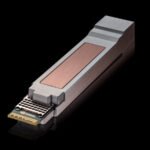
To run these massive 4-billion-parameter models at the physical point of contact, NVIDIA is deploying its latest Jetson T2000 and T3000 edge computing modules. These compact, rugged, and highly energy-efficient systems can be directly integrated into robot arms, agricultural tractors, or self-driving delivery pods.
3. The Fujitsu Collaborative Control Platform
Fujitsu is leading the development of a highly ambitious control platform that incorporates technologies from FANUC, Yaskawa, and Kawasaki. Built on Cosmos world foundation models and the NVIDIA Isaac robotics simulator, this platform bridges digital twins with physical factory floors. Before a physical robotic arm moves an inch on a real assembly line, its movements, safety margins, and physical variables are modeled and verified in virtual space.
Part III: Healthcare, Caregiving, and the 2050 Moonshot
Japan’s demographic crisis isn’t confined to factory floors; it is felt acutely in hospitals, eldercare facilities, and laboratories. To combat this, the Japan-NVIDIA alliance has stretched deeply into healthcare, life sciences, and eldercare automation.
The 2050 Caregiving Moonshot
The Japan Science and Technology Agency (JST) is leading a highly ambitious, long-term initiative known as the “Moonshot Project”. The goal is to develop fully autonomous, highly empathetic caregiving robots by 2050 to support the country’s aging population. To accelerate this timeline, JST is utilizing NVIDIA Isaac Sim to train robots in hyper-realistic virtual households, allowing them to practice delicate human interactions, navigate complex home layouts, and assist patients safely without risk of physical injury.
Medical and Surgical Robotics
Kawasaki Heavy Industries is actively integrating NVIDIA Isaac and Holoscan (an open-source, low-latency AI sensor processing platform) into its advanced clinical medical robots, FORRO and NURABOT. Designed for surgical support, real-time clinical monitoring, and automated hospital logistics, these machines rely on Holoscan to process raw camera feeds and sensor data with sub-millisecond latency, giving surgeons real-time AI guidance during procedures.
Accelerating Drug Discovery
Pharmaceutical powerhouses Astellas and Daiichi Sankyo have integrated NVIDIA’s specialized medical AI stack to run predictive models for drug discovery and high-fidelity molecular imaging. By running chemical simulations on NVIDIA GPU architecture, these companies have slashed the time required to identify viable therapeutic compounds from years to a matter of weeks.
Part IV: Cultural & Linguistic Sovereignty — The Nemotron Initiative
If physical AI is the muscle of Japan’s new tech strategy, custom language models are the brain. A major challenge for global AI adoption in Japan has been the native linguistic gap; Western LLMs are heavily optimized for English syntax, cultural nuances, and corporate communication styles, often leading to poor translations or a loss of cultural context when processing Japanese.
To address this, leading Japanese enterprises, research universities, and startups are building specialized, locally managed AI models using NVIDIA Nemotron open models, data libraries, and tools.
Why Open Models Matter: As Jensen Huang, founder and CEO of NVIDIA, pointed out during his Tokyo showcase: “Every nation and every company should own and control its intelligence infrastructure. Open models make that possible. They give countries, enterprises and researchers the freedom to inspect, improve, adapt, secure and deploy AI for their own needs.”
Several notable Japanese language models are being forged through this initiative:
- The Swallow Series (Institution of Science Tokyo): Built on open Nemotron datasets, the Swallow model is explicitly optimized for highly complex academic, scientific, and technical Japanese.
- The Sarashina Series (SoftBank & SB Intuitions): Trained using Nemotron libraries, the ultra-lightweight Sarashina3-mini model has been officially adopted by Japan’s Digital Agency to help automate public administrative workflows and civil service communications.
- Tsuzumi 2 (NTT DATA): NTT DATA utilized NVIDIA’s specialized Japanese persona dataset to train and fine-tune its tsuzumi 2 model, creating highly natural, contextually accurate conversational agents designed for local customer service and corporate administration.
- The Fugu Platform (Sakana AI): Promising local AI startup Sakana AI is using Nemotron to supercharge its “Fugu” model-routing platform. Rather than running a single massive, power-hungry model for every task, Fugu acts as an intelligent traffic controller, dynamically routing individual queries to the most cost-efficient, specialized model available.
Part V: Legacy of Power — The Supercomputing Foundation
This current wave of physical AI agreements is the culmination of years of calculated infrastructure planning between NVIDIA and the Japanese government. Japan has quietly spent the last several years upgrading its national supercomputing resources to establish a massive foundation of raw compute power:
1. ABCI 3.0 (AI Bridging Cloud Infrastructure)
Operated by Japan’s National Institute of Advanced Industrial Science and Technology (AIST) in Kashiwa, ABCI 3.0 is a massive public supercomputer built in partnership with Hewlett Packard Enterprise (HPE).
- The Hardware: It integrates thousands of NVIDIA H200 Tensor Core GPUs linked by NVIDIA Quantum-2 InfiniBand networking.
- The Power: Delivering 6 AI exaflops of computational performance, the system allows domestic research teams to train trillion-parameter-scale models with incredibly low latency.
2. FugakuNEXT
Following a historic codesign agreement between Fujitsu and NVIDIA, the successor to the world-renowned Fugaku supercomputer, code-named FugakuNEXT, is currently in active development. Aimed for full operations by 2030, FugakuNEXT will pair Fujitsu’s custom FUJITSU-MONAKA-X CPUs with NVIDIA’s high-performance Blackwell GPUs via NVIDIA NVLink Fusion. This specialized, high-bandwidth silicon interconnect allows for unified memory pooling, delivering a projected 100x increase in application performance compared to traditional CPU-only architectures.
3. RIKEN Scientific AI Supercomputers
Japan’s premier national research institute, RIKEN, has deployed two new scientific supercomputers utilizing NVIDIA GB200 NVL4 systems. Featuring 2,140 NVIDIA Blackwell GPUs connected via Quantum-X800 InfiniBand networking, these systems are used as proxy testing platforms for FugakuNEXT software development. They are currently driving research in high-stakes fields like climate modeling, automated laboratory synthesis, materials science, and quantum-classical hybrid computing.
Conclusion: A Blueprint for Global Tech Autonomy
The sweeping alliance between Japan and NVIDIA provides a compelling blueprint for how a nation can secure its place in an AI-dominated future. Rather than yielding control to foreign, closed-source cloud monopolies, Japan is actively building, owning, and customizing its own intelligence infrastructure.
By combining its world-class heritage in robotics, industrial hardware, and precision engineering with NVIDIA’s computing architecture, Japan is successfully turning a massive demographical crisis into an era of unprecedented automated innovation. The silicon shogunate has arrived—and it is preparing to automate the physical world.