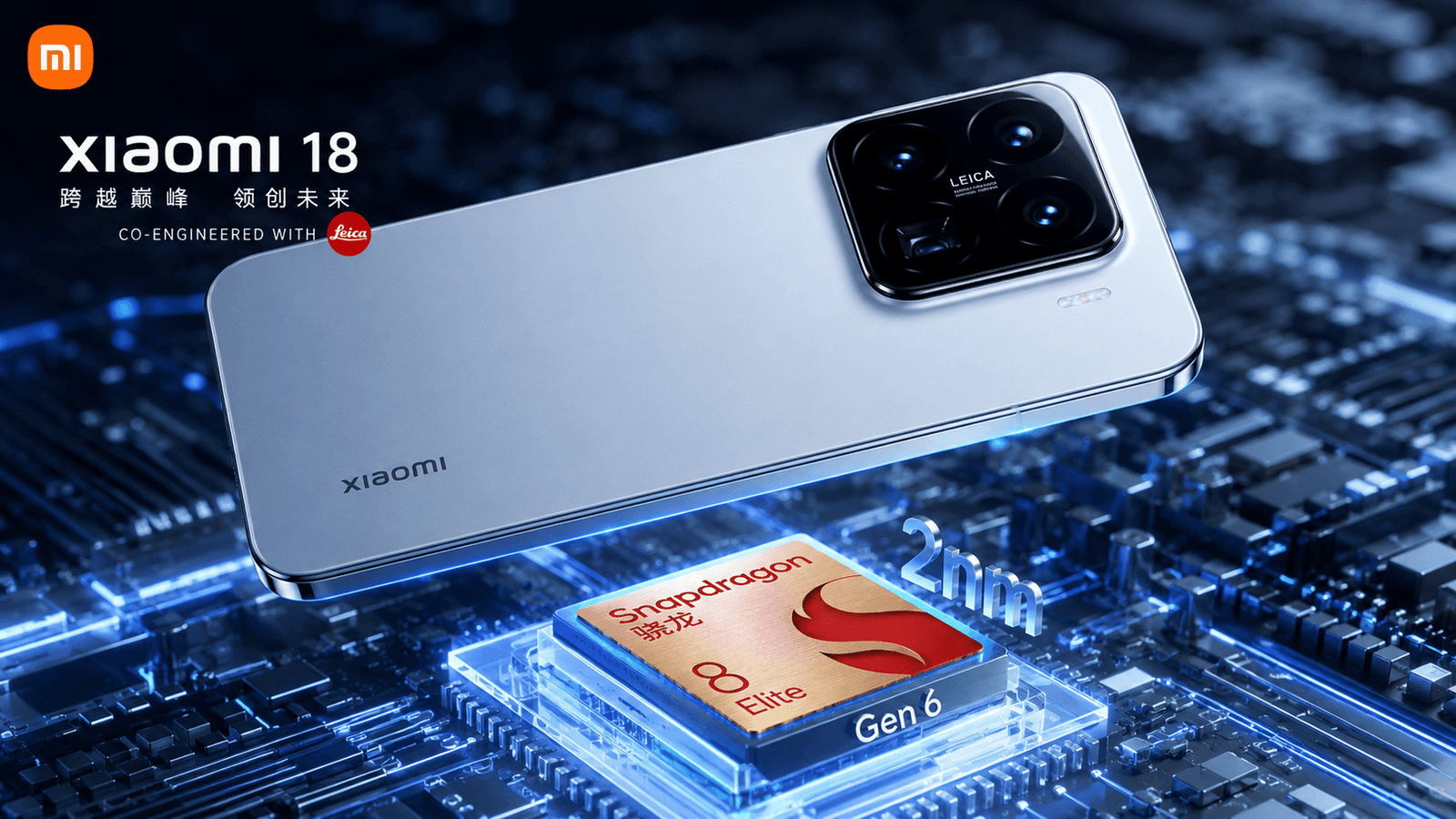
Next-Gen Silicon: Xiaomi 18 to Claim Snapdragon First
Xiaomi secures exclusive first-launch rights for Qualcomm’s next-gen 2nm Snapdragon 8 Elite Gen 6.

The global smartphone race has officially entered the 2nm silicon era, and the stakes have never been higher. Following the announcement of Qualcomm’s upcoming Snapdragon Summit, major tech insiders have confirmed that the Xiaomi 18 series has locked in exclusive first-launch rights for the next-generation Snapdragon 8 Elite Gen 6 chipset.
Scheduled to drop in late September, this release marks a fundamental shift in how premium mobile silicon is manufactured, priced, and distributed.
The 2nm Architecture: Standard vs. Pro Tiers
Faced with skyrocketing foundry costs, with reports pegging the cost of a single top-tier 2nm processor at an unprecedented $300, Qualcomm is splitting its flagship lineup into two distinct chipsets: the Snapdragon 8 Elite Gen 6 and the Snapdragon 8 Elite Gen 6 Pro.
Both processors utilize an advanced 2+3+3 Oryon CPU core architecture, but they diverge sharply in graphical power and on-chip memory layouts.
By offloading heavy AI processing loops directly to the expanded graphics memory on the Pro variant, the hardware can run local generative AI models, text-to-image engines, and complex terminal queries entirely on-device without wasting battery life or needing cloud connectivity.
The Three-Tier Phone Strategy
To navigate these intense processor price hikes without forcing massive retail cost increases across its entire catalog, Xiaomi is implementing a strict, three-tiered structure for the Xiaomi 18 lineup.
- Xiaomi 18 Pro Max: The absolute crown jewel of the lineup. It will exclusively house the expensive Snapdragon 8 Elite Gen 6 Pro silicon. To justify its ultra-premium positioning, it introduces a massive dual 200MP camera array utilizing a highly advanced 1/1.28-inch LOFIC main sensor for unmatched low-light dynamic range.
- Xiaomi 18 Pro: Aimed directly at mainstream flagship buyers, the Pro model opts for the standard Elite Gen 6 chip. It balances performance with unique hardware features, including a secondary rear display panel and a hardware-integrated Privacy Display that completely blocks side-angle viewing in public spaces.
- Xiaomi 18 (Base Model): Slated for a slightly staggered release in October, the standard variant maximizes daily utility. It pairs the standard Elite Gen 6 chip with a compact 6.4-inch 2K display framework and packs a massive 7,200mAh battery cell, pushing the device into true two-day battery life territory.
Flagship Performance Matrix
The structural changes across the upcoming Xiaomi 18 engineering variants showcase how the brand plans to split its premium features:
| Specification Framework | Xiaomi 18 (Base) | Xiaomi 18 Pro | Xiaomi 18 Pro Max |
| Silicon Tier | Snapdragon 8 Elite Gen 6 | Snapdragon 8 Elite Gen 6 | Snapdragon 8 Elite Gen 6 Pro |
| Graphics Unit | Adreno 845 | Adreno 845 | Adreno 850 (18MB GMEM) |
| Battery Capacity | 7,200 mAh | 6,000–6,500 mAh (Est.) | 8,000 mAh |
| Primary Camera | 200MP + 3x Periscope | 50MP Triple Array | Dual 200MP + LOFIC Sensor |
| Unique Hardware | Ultra-Compact Chassis | Rear Secondary Display | Advanced Local AI Core |
| Launch Timeline | October | Late September | Late September |
Navigating the High-End Tech Cycle
As mobile architectures get faster and local processors begin handling massive data pipelines natively, maintaining a perfectly streamlined digital environment is crucial. Whether you are managing massive code repositories on your local machines or optimizing layout templates for high-performance mobile viewing, messy code architectures and bloated background scripts will drastically slow down your workflows.
Keeping your storage frameworks and server scripts perfectly organized ensures your software runs flawlessly on next-generation hardware. For practical, step-by-step guides on streamlining web layouts and managing backend architectures efficiently, check out our professional development overviews at ForanTech.
Ultimately, the Xiaomi 18 series proves that the premium smartphone market is moving away from minor, iterative updates. By combining custom 2nm silicon, privacy screens, and periscope lenses on base models, Xiaomi is drawing an aggressive battle line against its competitors for the remainder of the year.
To track real-time benchmark leaks, hardware validation sheets, and supply chain updates as the September launch approaches, follow the live developer threads on the GSMArena Phone Database.
To see exactly how these massive battery upgrades and high-performance camera modules fit into compact phone bodies, you can watch this Xiaomi Flagship Smartphone Teardown and Internals Analysis. This video breaks down how modern smartphone engineers clear out internal space for massive cooling chambers, structural frames, and multi-layered camera sensors, helping you visualize the layout choices behind the upcoming Xiaomi 18 series.