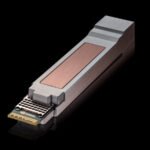
Jalapeño: OpenAI’s New Custom ASIC Built in Just 9 Months
OpenAI and Broadcom officially unveil "Jalapeño," a custom LLM inference chip developed in a record-breaking nine-month production cycle.

The race for independent AI hardware infrastructure has taken a massive leap forward. Yesterday, June 24, 2026, OpenAI partnered with semiconductor giant Broadcom to announce Jalapeño, a custom application-specific integrated circuit (ASIC) engineered exclusively for high-throughput, low-latency Large Language Model (LLM) inference.
Rather than relying entirely on third-party hardware pipelines, the co-developed accelerator was pushed from initial design to final manufacturing tape-out in a record-breaking nine months, shifting the economics of frontier model deployment.
Technical Specifications: Jalapeño Hardware Architecture
To fully map out how this new custom silicon alters backend processing efficiency, look at the verified deployment parameters:
| Engineering Layer | Confirmed Infrastructure Selection | Real-World Operational Status |
| Primary Project Target | OpenAI-Broadcom Jalapeño Inference Processor | Design tape-out complete; deployment scaling begins late 2026 |
| Hardware Classification | Custom Application-Specific Integrated Circuit (ASIC) | Optimized entirely for generative text and agentic reasoning loops |
| Development Cycle | Nine-Month Accelerated Coprocessor Design | Built utilizing internal OpenAI models to automate chip layout scripts |
| System Integrator | Celestica Custom Board and Rack Engineering | Managing structural data center power distribution modules |
| Target Infrastructure | Gigawatt-Scale Enterprise Clusters | Deployed in partnership with Microsoft Azure data systems |
1. Automated Chip Layout: Models Designing Custom Silicon
The most disruptive element of the Jalapeño project is the unprecedented speed of its development timeline. A standard high-performance semiconductor design cycle typically requires two to three years of manual engineering verification.
By leveraging its own proprietary frontier models to automate complex hardware description code and simulate silicon floorplanning layouts, OpenAI compressed the design phase down to just nine months. This operational shift proves that generative models can successfully self-optimize the physical infrastructure required to execute future neural networks, drastically reducing future engineering costs.
2. Low-Latency Optimization for Real-Time AI Agents
While standard graphics processing units excel at massive parallel training workloads, they often struggle with the rapid, conversational response times demanded by interactive agentic workflows. Jalapeño is optimized specifically for the inference phase.
- Throughput Maximization: The internal pipeline is stripped of non-essential graphical rendering logic, dedicating all physical die area to matrix multiplication.
- Latency Reduction: The memory architecture interfaces directly with Broadcom’s high-bandwidth networking switches to eliminate token streaming delays.
- Agent Integration: Built specifically to sustain continuous, multi-step agent reasoning loops without hitting thermal or processing bottlenecks.
The Inference Efficiency Law: Hardware specialization dictates real-world model deployment costs. As models transition from static text generators into active, autonomous agents, standard processors create latency barriers that can only be solved by tailoring silicon paths directly to token structures.
3. Shaking Up the Global Data Center Monopoly
The unveiling of Jalapeño represents a direct challenge to Nvidia’s historical dominance over the AI hardware supply chain. Over the last tracking cycle, high procurement costs and lengthy shipping delays for enterprise chips have limited how quickly tech companies can scale up their server capacity.
By designing proprietary accelerators and partnering directly with manufacturing lines, OpenAI is establishing an independent hardware footprint. This move allows the company to protect its software platforms from external supply shocks while driving down the per-token computing costs for developers utilizing the ChatGPT ecosystem.
The Verdict: A Fast-Tracked Semiconductor Shift
The launch of the Jalapeño platform marks a major milestone in hardware vertical integration. While the initial silicon must still undergo large-scale physical deployment across data centers over the coming months, it proves that the timeline for creating specialized AI chips has permanently shrunk.
Pros
- Drastic Latency Reductions: Tailoring physical silicon directly to inference tasks maximizes real-time token generation speeds.
- Compressed Development Windows: Utilizing advanced models to design physical circuitry changes how chips are built.
Cons
- Narrow Functional Scope: Because the ASIC architecture is highly specialized for text inference, it cannot be repurposed for generalized graphical rendering or alternative computing tasks.
What do you think?
Do you think custom, single-purpose chips like Jalapeño are the key to making real-time AI agents fast enough for daily use, or should the industry stick to versatile, general-purpose processors? Let us know your thoughts in the comments below!
For a closer look at how customized database structures, localized theme configurations, and automated backend routing scripts are deployed to support high-traffic media websites, check out the development documentation on the ForanTech Tech Portal. This analysis resource tracks all responsive interface setups and modern optimization techniques transforming the digital space.
To review the official design press releases, engineering partnership briefs, and operational hardware roadmaps detailing this custom processor rollout, visit the official OpenAI Infrastructure News Feed. This resource maps out every corporate milestone guiding the next generation of custom silicon.