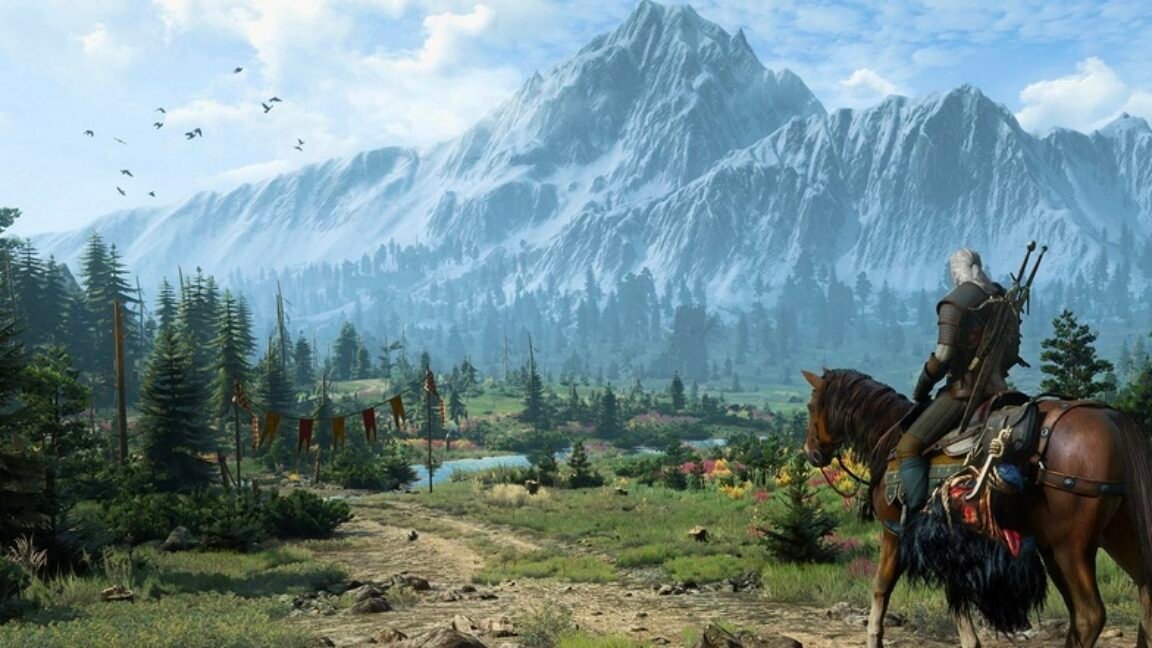
The Witcher 3: Casting a New Geralt?
Veteran development modders unearth datamined files to structurally recreate the legendary Catriona Plague cut questline within The Witcher 3.

The modern interactive entertainment industry has spent the last few product cycles trapped in a deeply exhausting, wildly predictable cycle of corporate repetition. Dominant platform holders and mainstream manufacturing labs have grown entirely comfortable rolling out minor physical engine patches, incremental visual upscale revisions, or basic software variations that refuse to alter the core structural experience of consumer software. Technology bloggers, software developers, and daily video game players have grown completely burned out by this passive approach: you are constantly forced to absorb defensive public relations marketing while enduring rising software tier price points, aggressive monetization pipelines, and stagnant design logic that fails to capture the raw creative magic of early gaming breakthroughs.
On June 13, 2026, a groundbreaking software engineering disclosure from the PC gaming community completely shifted that narrative of quiet digital iteration.
While mass-market focus was anchored entirely on standard seasonal patches and generic software localization bundles, an investigative code breakdown pulled back the curtain on an immense community-driven development milestone.
Official community development channels confirmed the release of a massive, multi-hour community-driven project framework tracking under the name The WAR Project. Rather than a standard mechanical adjustment or a basic visual cosmetic modification, this tactical campaign restoration utilizes factory-verified datamined assets discovered deep within the game’s core engine files. Let’s look straight beneath the hood at the factory-verified asset structures, system-level narration tracking, and structural design architecture driving this historic interactive resurrection.
Technical Specifications: The WAR Project Campaign Integration Grid
To truly appreciate how heavily this community assembly team and specialized software engineers have re-engineered their script pipelines, dynamic world state triggers, and sound layer parameters to achieve this massive title ahead of schedule, let’s map out the verified metrics tracking through the platform:
| System Layer | Verified Project Blueprint Component | Real-World Operational Impact |
| Campaign Scale | 10-Hour Structural Narrative Restructuring | Adds 12 fully integrated custom quests directly into the existing northern realms world map |
| Core Narrative | Catriona Plague Deep-Dive Asset Grid | Transforms background political rumors into an active, system-wide environmental emergency |
| Character Matrix | Restored Iorveth / Witcher 2 Rebel Logic Paths | Reintroduces the fan-favorite elven commander with complete combat and dialogue mechanics |
| Encounter Engine | Gaunter O’Dimm Demonic Subsystem Loop | Integrates new custom creature varieties and specialized Nilfgaardian tactical squads |
| Audio Pipeline | Open Cast Community English/Polish Voice Grid | Replaces missing audio data with high-fidelity, studio-grade voice talent lines |
1. Unearthing the Catriona Plague: Restoring a Lost Dark Horizon
Historically, when a primary role-playing software studio prepares to ship a massive open-world fantasy environment, they rely on a highly calculated, deeply flawed project template. They write massive, sprawling narrative scripts containing hundreds of interconnected world events, run straight into aggressive publisher shipping deadlines, and abruptly slice out entire core storylines, leaving behind broken asset files, disconnected non-player characters, and hollow plot threads that fans are left to ponder for a decade. This defensive development approach protects the shipping schedule but permanently starves the final product of vital, planned artistic depth.
The campaign design configuration behind the emergence of The WAR Project completely breaks this historical pattern by choosing absolute narrative continuity.
By mining the deep, fragmented codebase left behind by the original creators, the modification team successfully restored the lost Catriona Plague campaign arc. In the stock retail build, this devastating biological epidemic existed merely as a background world event mentioned in passing text documents and random tavern dialogues. This comprehensive restoration transforms the disease into a massive, active crisis that sweeps through the war-torn swamps of Velen, forcing players to navigate dense quarantine zones, track biological vectors, and engage with entirely new localized environmental puzzles that add incredible weight to the game’s dark fantasy world.
2. The Return of Iorveth: Healing a Massive Generational Narrative Gap
Beyond the operational changes shifting across the world design pipeline, this June 13 disclosure exposes an incredibly advanced writing philosophy that directly fixes the single greatest environmental compromise of the game’s transition from its 2011 predecessor. For several product cycles, dedicated role-playing fans have lamented a frustrating plot compromise forced upon them by production cutbacks: despite being the central driving force behind the political branching choices of the previous game, the iconic elven rebel leader Iorveth was completely absent from the final retail release, leaving his entire faction’s story arc floating without closure.
The specialized assembly team behind this restoration has completely resolved this script-level vacancy by rebuilding Iorveth’s designated questlines from the ground up.
By connecting loose dialogue variables and leftover structural scripts back into the main game engine, the mod seamlessly weaves the legendary commander back into the political struggles of the Northern Realms. Players don’t just find a static non-player character standing in a tavern; they get to experience high-stakes stealth operations, localized guerrilla warfare choices, and deep lore conversations that fully honor the choices made years prior, offering the true, uncompromised narrative payoff that fans have spent over a decade waiting for.
3. Demonic Iterations: Expanding the Influence of Gaunter O’Dimm
The interactive supernatural space within role-playing design has spent the last few product lifecycles hitting a clear evolutionary wall regarding villain deployment and ongoing systemic threats. When complex game worlds introduce terrifying, reality-bending entities, those characters are typically locked inside isolated downloadable content zones, completely detached from the core open-world environment, which destroys the feeling of a cohesive, living world.
The tactical writing team behind the new campaign expansion directly counters this narrative limit by restoring the Gaunter O’Dimm Narrative Proximity Scripts.
Long before he served as the primary psychological threat of the acclaimed Hearts of Stone expansion, the original design documents revealed that the enigmatic Master Mirror was intended to pull the strings during the Catriona Plague outbreak. This modification carefully restores his early influence, introducing creepy foreshadowing elements, reality-bending gameplay anomalies, and entirely new demonic monster types that attack players along the roads of Velen. This seamless integration gives the entire game world an eerie, connected supernatural layer that makes the overarching story feel much more complete and intentional.
4. The Voice Casting Horizon: Rebuilding the Verbal Architecture
For technology buyers, engine developers, and hardware enthusiasts who view modern modifications through the lens of immersion and asset completeness, the ultimate mountain this project must climb is the total absence of original audio assets. Recreating massive, cinematic story arcs inside an old engine environment traditionally hits an absolute barrier when players are forced to read silent text blocks or endure low-quality, artificial computer-generated voice clones that completely break the emotional impact of major plot twists.
The production leadership behind The WAR Project is resolving this presentation bottleneck by launching a massive, cross-regional Global Open Voice Audition Campaign.
Because the original voice recordings for these cut storylines were completely lost during production, the development group is actively hiring real, human voice talent across both English and Polish linguistic circles to record thousands of lines of fresh dialogue. This includes casting a completely new voice actor to take on the massive responsibility of voicing the legendary protagonist, Geralt of Rivia. By prioritizing human voice work over cheap machine learning shortcuts, the project ensures that the restored cut content maintains the exact same emotional depth, gritty tone, and high-fidelity cinematic presentation that defined the base game.
The Verdict: Community Engineers Deliver a True Gaming Milestone
The internal production insights surrounding the emergence of The Witcher 3: The WAR Project represent an uncompromised, incredibly calculated triumph for community-driven game preservation and software restoration logic. By matching a massive 10-hour cut-content campaign with complex quest scripts, restored character arcs, and a strict dedication to human-driven voice talent performance, these veteran creators have established an outstanding milestone that completely redefines how legacy gaming titles are preserved and enhanced for years to come.
Pros
- Exceptional Campaign Depth: A massive 10-hour, 12-quest narrative grid delivers a wealth of high-quality content for fans to explore.
- Flawless Lore Restoration: Bringing back Iorveth and expanding the Catriona Plague successfully repairs major plot gaps left behind by production cuts.
- True Cinematic Preservation: Rejecting robotic AI voice cloning in favor of a full, human voice-acting casting call preserves genuine emotional depth.
- Veteran Development Quality: Built by proven modding experts, guaranteeing excellent compatibility with the game’s core framework.
Cons
- Extensive Development Timeline: The ambitious need to record thousands of lines of human dialogue means the final, fully-voiced rollout will require significant patience.
- Complex Third-Party Management: Modifying deep underlying world states requires a clean game installation and careful file handling to avoid script compilation errors.
To check out the full technical breakdown, explore detailed development roadmaps, and catch real-time progress updates straight from the source, you can jump directly over to the comprehensive reporting at PC Gamer to see exactly how this race to preserve and expand gaming’s greatest masterpieces is taking shape!
What do you think?
Does the news that community developers are fully restoring The Witcher 3’s largest lost cut-content questline make you excited to jump back onto the Path with a fresh voice actor, or do you feel that a game’s cut content should be left in the past to focus entirely on next-generation sequels? Let us know your thoughts in the comment section below!
For a broader, deep-dive look at how community software developers and engineering groups are utilizing official modding suites to breathe incredible new life into classic open-world environments, check out The Witcher 3 REDkit Modding Showcase. This analytical video tracks the latest developer breakthroughs, asset creation tools, and massive community expansion projects transforming the modern gaming landscape.
This breakdown tracks the precise engine techniques and community collaborations required to unpack and assemble high-fidelity cut content inside the game’s official REDkit editor suite.