Doom The Dark Ages: Forcing a Radical New Era for Shooters
Doom: The Dark Ages officially debuted at the June 2026 Xbox Showcase, introducing a gritty, shield-saw-wielding prequel to the legendary franchise.

The premium first-person shooter landscape has spent the last few development cycles trapped in a deeply exhausting, wildly predictable corporate pattern. Major publishing houses and mainstream development studios have grown entirely comfortable rolling out repetitive, live-service multiplayer arenas, hyper-monetized battle pass expansions, or safe modern sequels that refuse to alter the core structural mechanics of the genre. Passionate shooter enthusiasts, active community content creators, and competitive purists have grown completely burned out by this clinical approach: you are constantly forced to choose between playing bloated, always-online shooters that lock basic cosmetic assets behind paywalls or enduring massive software droughts from franchises that have completely lost their original creative grit.
During the premier broadcast of the Xbox Games Showcase, id Software completely upended that cycle of corporate laziness. Crashing directly into the mid-2026 summer showcase window with an explosive gameplay reveal that instantly dominated global trending networks, the legendary studio officially unveiled Doom: The Dark Ages.
Ditching the high-tech, futuristic cybernetic settings that defined the previous modern entries, this definitive deployment introduces a breathtaking, dark-fantasy prequel framework. By wrapping the brutal, primitive origins of the Doom Slayer inside an uncompromised, hyper-realistic rendering engine, id Software is proving that a premier action franchise can evolve its gameplay mechanics without sacrificing an ounce of its signature intensity. Let’s look straight beneath the hood at the verified production parameters and real-world engine upgrades driving this historic gaming return.
Technical Specifications: The Doom: The Dark Ages Engine Grid
To truly appreciate how heavily id Software’s engineering teams have re-engineered this dark-fantasy world to maximize current-generation console architectures and PC memory highways, let’s map out the verified framework:
| System Layer | Next-Gen Software Component Profile | Real-World Operational Impact |
| Core Engine | Next-Gen id Tech Processing Node Architecture | Delivers photorealistic asset rendering and uncompromised structural geometry |
| Input Mechanics | Dynamic Shield-Saw & Mace Weapon Array Layout | Introduces advanced parrying mechanics and high-impact tactile combat loops |
| Target Performance | Native 120Hz Fluid Frame Pacing Target Layout | Eliminates macro-stuttering, keeping dense arena combat perfectly smooth |
| Audio Architecture | Dark Industrial-Metal Spatial Soundscape Grid | Drives deep acoustic immersion through heavy, responsive bass tracks |
| Storage Pipeline | Direct-Asset Streaming Zero-Loading System | Wipes out level-to-level loading gates to keep the action relentless |
| Gore Subsystem | Real-Time Dynamic Flesh & Armor Dismemberment Logic | Generates authentic physical reactions to directional ballistic impacts |
1. Ground-Up Dark-Fantasy Re-Engineering vs. Lazy Sci-Fi Repetition
Historically, moving a multi-decade action franchise into a fresh setting is an absolute minefield of creative compromises. Because rewriting core physics scripts to handle complex close-quarters defensive tools requires massive financial backing and years of meticulous software optimization, developers almost always take the easy way out.
They dump the existing game code into a slightly modified map layout, swap out futuristic plasma rifles for basic crossbow-style weapon skins, run a generic color filter over the environment to make it look medieval, and push it out to digital storefronts with zero structural transformation to the core movement mechanics.
Doom: The Dark Ages completely rewrites this production template. Built as a core, primary project designed specifically to showcase the elite capabilities of modern graphics silicon, id Software has deployed an entirely localized combat translation pipeline.
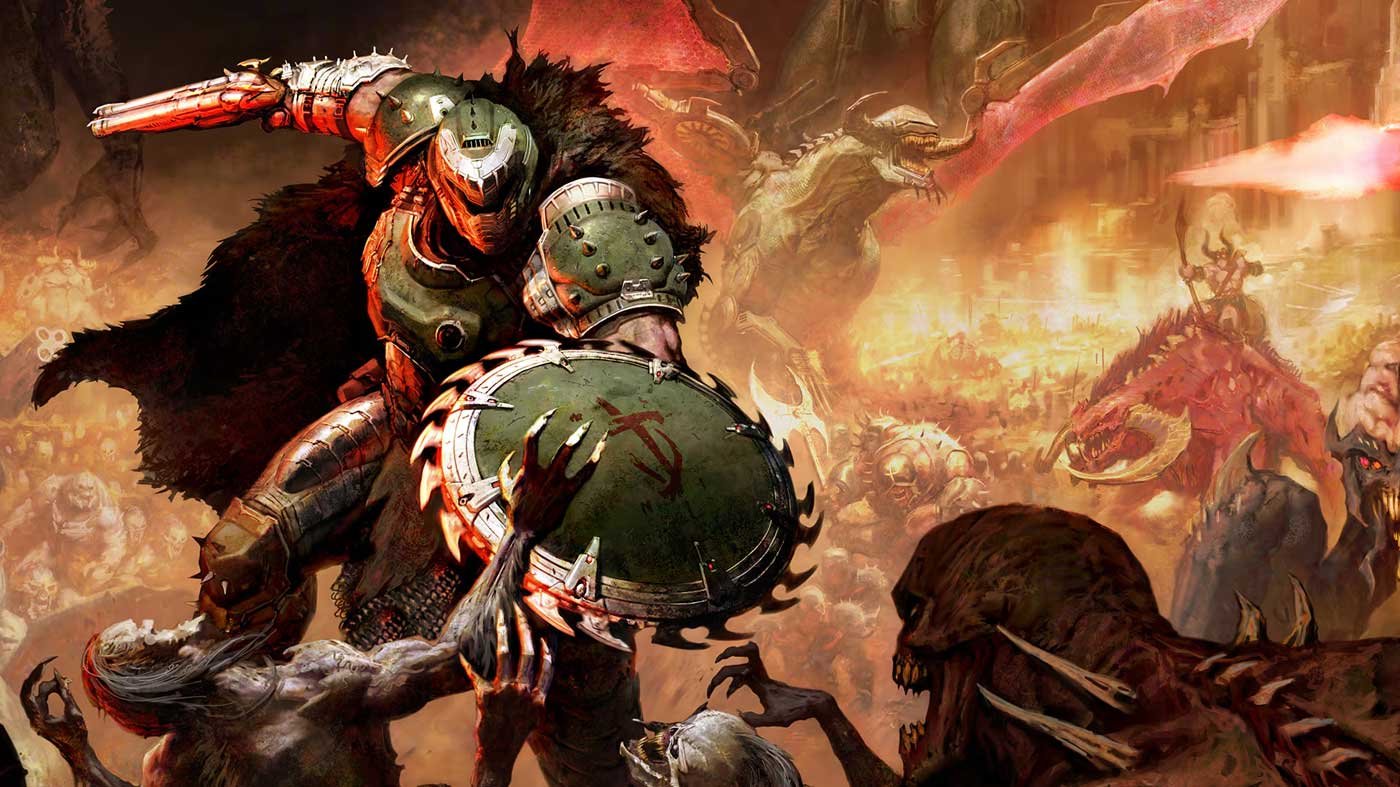
The title relies on a completely fresh asset library, rendering sprawling dark-fantasy battlefields, stone fortresses, and gothic underworld gates with rich physical geometry, real-time weather degradation, and dynamic cloth physics that react authentically to character movement. During live gameplay validation loops, this streamlined engine layout maintains an uncompromised, fluid frame rate—moving away from the hyper-fast vertical dashing of previous entries to favor a heavy, grounded power stance that emphasizes deliberate spatial positioning and crushing defensive parries.
2. Advanced Projectile Mechanics: Re-Engineered Crowded Arena Combat
Beyond the massive jump applied to raw model density, the gameplay reveal serves as a phenomenal showcase for premium spatial combat mechanics. Previous entries relied heavily on hitscan weapon logic, where pulling the trigger instantly registered damage on an enemy model regardless of distance, resulting in combat loops that prioritized pure reflex speed over strategic tracking.
The 2026 prequel entirely updates this layout by integrating full, physics-based Crowded Projectile Chaos.
The engine tracks hundreds of individual physical projectiles simultaneously as they fill the screen, forcing players to use their brand-new, mechanical Shield-Saw to deflect incoming fire back into hordes of enemies. This defensive layer behaves with incredible physical accuracy: you can rev the serrated edge of the shield to chew through armor plates, launch it across the arena to slice down distant snipers, or snap it into a blocking position the exact microsecond a massive boss attacks to trigger an unthrottled stun loop. This profound focus on weapon utility and deliberate combat tracking transforms standard arena skirmishes into high-stakes chess matches, giving players a deep sense of mechanical mastery.
3. Direct-Asset Streaming: Eradicating the Loading Bottleneck
A massive technical limitation of early action-game engines was the constant need for aggressive environmental segregation. To keep strict system memory constraints from crashing the hardware, developers were forced to divide their levels into highly sandboxed zones, isolating distinct areas behind long elevator rides, narrow vent crawls, or uninspiring cutscenes designed solely to give the processor time to swap assets out of system RAM.
The new id Tech layout completely eradicates this gameplay friction by utilizing a high-speed direct-asset streaming storage pipeline.
Because modern computing systems feature dedicated solid-state data architecture, the upgraded engine streams high-resolution environmental structures into memory seamlessly in the background on the fly. For players, this means the loading gateways that once separated narrow fortress corridors from wide-open, dragon-ridden battlefields are completely gone. You can dive straight out of a castle window, land directly in a massive, mud-soaked warzone, and engage hundreds of active enemies without encountering a single system hitch or asset pop-in delay, establishing an unbroken sense of scale that honors the developers’ sweeping dark-fantasy vision.
4. Deep Industrial Soundscapes and Spatial Audio Precision
Bringing a historic milestone franchise forward into a primitive, ancient era requires a meticulous level of care that extends far beyond the visual plane. The classic high-energy synthesizer beats that backed the futuristic entries wouldn’t match the heavy, medieval weight of a dark-fantasy prequel.
The upcoming launch elevates this foundational audio layer by implementing a crushing industrial-metal spatial soundscape.
The internal sound design teams have combined raw, primitive acoustic instruments—like giant war drums and ancient horns—with modern, distorted low-tuned guitars. Utilizing advanced spatial audio formatting, the acoustic layout tracks the physical environment around your character model. If a massive mechanical demon charges from your back left quadrant, the sound waves bounce realistically off nearby stone pillars, allowing you to track enemy movements purely by acoustic instinct, creating an unprecedented level of immersion that pulls you straight onto the battlefield.
The Verdict: The Absolute Peak of First-Person Action
The sudden arrival of Doom: The Dark Ages is an uncompromised, incredibly refreshing turning point for the video game industry. By matching an elite, ground-up graphic overhaul with stunning physics-based projectile mechanics, an unbroken zero-loading direct-asset streaming layout, and a phenomenal spatial industrial score, id Software has delivered an exceptional premium standard that fundamentally redefines how historic action franchises evolve.
Pros
- Stunning Dark-Fantasy Visuals: Recreates an ancient, war-torn world with spectacular high-fidelity detail.
- Flawless Shield-Saw Combat: Introduces an incredible, deep parrying system that completely refreshes the classic loop.
- Seamless Direct-Asset Streaming: Eradicates internal loading bottlenecks to keep the action moving at an intense pace.
- Immersive Spatial Industrial Score: Combines crushing metal tracks with spatial engineering for elite audio tracking.
Cons
- Demanding System Requirements: Pushing hundreds of active physical projectiles simultaneously strains older processing architectures.
- Deliberate Movement Shift: Players who prefer hyper-fast vertical dashing will face a distinct learning curve adjusting to the grounded power stance.
To analyze the live developer gameplay breakdowns, official cinematic trailers, and upcoming digital platform pre-order matrices straight from the source, you can jump directly over to the official Bethesda Pressroom Global News Hub to see how the next era of action-shooter craftsmanship is taking shape!
What do you think?
Does the combination of a fully grounded dark-fantasy setting, a brutal shield-saw parry system, and a zero-loading direct-asset streaming pipeline make Doom: The Dark Ages your absolute most anticipated shooter upgrade, or do you prefer your shooter experiences anchored strictly in futuristic sci-fi environments? Let us know your thoughts in the comment section below!