Gears of War E-Day: This New Xbox Game Conquers the Summer
Microsoft absolutely dominated the summer season on June 7, 2026, dropping an official, jaw-dropping look at Gears of War E-Day.

The global military-shooter ecosystem has spent the last few years trapped in a highly predictable, cyclical design rut. Major publishing conglomerates have consistently defaulted to rolling out safe, asset-flipped modern warfare packages that focus heavily on aggressive microtransactions while leaving foundational narrative depth completely behind. Passionate action-gaming enthusiasts have grown incredibly exhausted from the exact same corporate cycle: you either accept a broken multiplayer experience filled with severe server de-synchronization, or you watch your favorite iconic story-driven franchises fade into obscurity due to lack of creative direction.
On June 7, 2026, Microsoft completely flipped that narrative on its head. Closing out the highly anticipated Xbox Games Showcase 2026 and immediately pivoting into a dedicated Gears of War: E-Day Direct, Xbox Game Studios pulled back the curtain on its most ambitious first-party production of the generation.
IGN
Acting as a massive prequel set fourteen years before the events of the original title, Gears of War: E-Day shifts the entire franchise back to its gritty, atmospheric survival-horror roots. By showcasing the terrifying initial hours of the Locust invasion through the eyes of a younger Marcus Fenix and Dom Santiago, this reveal completely revitalizes the hardware ecosystem. Let’s lift the lid on the underlying technical engine profile to see how this heavy visual showcase plans to maximize current-generation console systems.
Technical Specifications: The Unreal Engine 5.5 Blueprint
To fully comprehend how heavily The Coalition is pushing the boundaries of real-time architectural streaming, we can analyze the factory-verified engine metrics confirmed directly during the post-showcase deep dive:
| Engine / Rendering System | Target Hardware Configuration Profile | Real-World Operational Impact |
|---|---|---|
| Development Engine | Unreal Engine 5.5 (Custom Sub-System Build) | Unlocks hyper-realistic structural destruction and fluid physics |
| Primary Platforms | Xbox Series X|S, Windows PC (Steam / Game Pass) | Engineered entirely for high-speed, direct-to-memory data pipelines |
| Target Presentation Mode | Performance Targeting 60 FPS with Lumen Processing | Delivers smooth, fast combat movement tracking without visual drops |
| Geometry System | Nanite Virtualized Polygon Geometry Mesh | Completely eradicates visible environmental pop-in during panning shots |
| Illumination Framework | Real-time hardware-accelerated global illumination | Creates terrifying, dynamic shadows that shift realistically around cover |
| Launch Day Availability | Day-One Release on Xbox Game Pass | Provides immediate infrastructure access to millions of subscribers |
1. Returning to True Tactical Tension: A Brutal Prequel Layout
When the franchise originally exploded onto the scene two decades ago, it was celebrated for its thick, claustrophobic atmosphere and heavy, intimate tactical movement. However, as subsequent sequels expanded the scope into massive world-ending conflicts, the immediate sense of personal survival terror slowly dissipated.
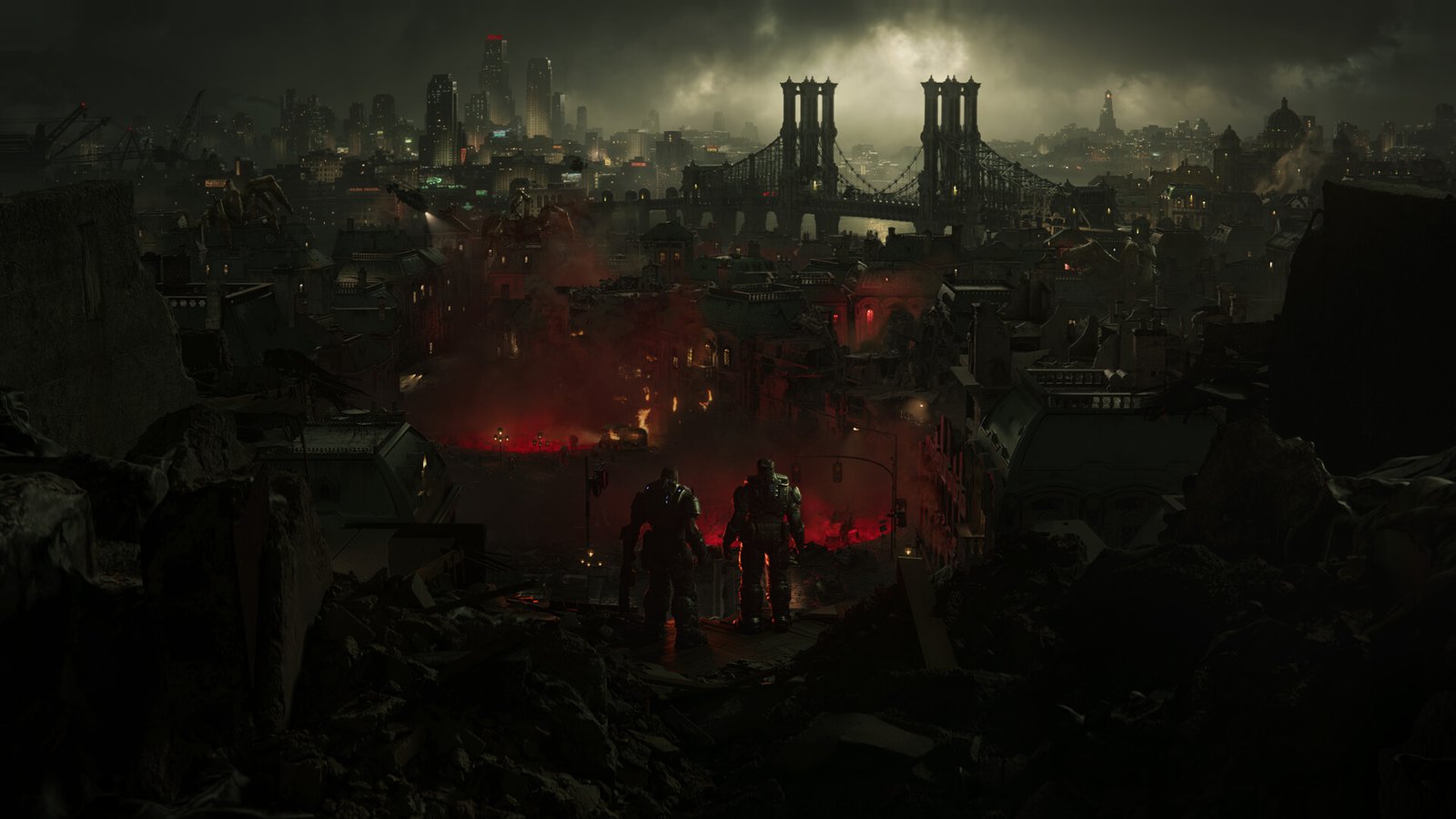
The E-Day layout entirely strips away the bright, expansive vehicle sandboxes of recent entries to lock players directly into the crumbling, chaotic streets of the city of Ephyra. The game focuses heavily on treating a single Locust Drone not as generic cannon fodder, but as a terrifying, nightmarish monster that requires genuine tactical coordination to bring down.
The physical cover mechanics showcased during the in-engine presentations look incredibly heavy and grounded. Marcus Fenix moves across the ruined urban landscapes with real physical weight, with every slide into a concrete wall or leap over a piece of debris registering with massive kinetic energy. This intense level of tactile translation is critical; if you have spent any time studying our comprehensive SteamOS 3.8.6 System Performance Analysis, you know that sub-millisecond input registration is the definitive line between a fluid, rewarding shooter loop and absolute mechanical frustration.
2. Setting Next-Gen Standards: Hyper-Dense Polygon Realism
Beyond the masterful narrative pacing of the showcase, the June 7 debut served as an absolute showcase for state-of-the-art software optimization. Utilizing an aggressively modified iteration of Epic Games’ Unreal Engine 5.5 software suite, the developers are pushing a staggering volume of geometric detail onto the screen.
By leveraging native Nanite virtualized geometry, every single brick, shattered window fragment, and piece of twisted metal bracing inside Ephyra’s crumbling classical architecture is rendered down to the sub-pixel level.
This extreme level of graphical fidelity demonstrates why robust engine scaling is mandatory to keep modern software running efficiently. Whether you are running an ultra-premium portable gaming laptop like the one detailed in our comprehensive ASUS ROG Strix Scar 18 review or pushing a native desktop graphics processor to its absolute thermal limit, excellent background asset streaming is what ultimately keeps frame rates locked at a fluid 60 FPS without turning your gaming setup into a literal furnace.
3. Spatial Audio Propagation: Sound Tracks the Enemy
An underrated element of the E-Day Direct presentation was the audio engineering team’s focus on next-generation spatial sound design. Because the Locust Horde attacks from beneath the earth, breaking through solid pavement and bursting out of walls, players must actively rely on object-oriented audio propagation to track emerging threat vectors.
If a concrete floor is buckling or a subterranean creature is scratching through a brick barrier directly behind you, the sound will muffled and echo dynamically based on the exact thickness and density of the structural materials separating you from the danger.
This level of auditory detail demands premium tracking peripherals to fully appreciate. If you have explored the custom acoustic layouts detailed in our comprehensive Logitech G Pro X 2 Lightspeed review, you understand exactly how much a true graphene driver matrix can alter your spatial awareness in a multi-layered digital environment. The Coalition is leaning heavily on this type of hardware precision to ensure players can survive pitch-black underground tracking sequences relying almost entirely on their auditory survival instincts.
4. The Multi-Generational Contrast: Tracking the Evolution Leap
Witnessing Gears of War: E-Day run natively on modern developer kits highlights just how fast the broader consumer technology space has evolved over the past decade. There was a time when “cutting-edge cinematic presentation” simply meant trying to squeeze flat, low-resolution gray and brown textures onto a highly compressed physical storage disc while displaying the output on a low-contrast panel.
We can trace this historical design jump clearly by examining old-school display metrics; for instance, reviewing the legacy screen properties inside our classic LG G6 review reveals how far mobile panel brightness, contrast accuracy, and real-time color rendering pipelines have progressed. We went from small consumer displays struggling to output basic, compressed digital images to localized home entertainment hubs processing photorealistic, ray-traced global illumination fields in real time.
The Verdict: Xbox Reclaims Its Core Legacy
The June 7 Xbox Showcase debut of Gears of War: E-Day is a spectacular, uncompromised triumph for longtime action-gaming purists. By pairing a dark, terrifying survival atmosphere with state-of-the-art Unreal Engine 5.5 physics and instant Day-One Game Pass accessibility, Microsoft has successfully set the stage for what will undoubtedly be the definitive blockbuster experience of the upcoming release cycle.
Pros
- Stunning Visual Fidelity: Unreal Engine 5.5 Nanite and Lumen systems deliver breathtaking, photorealistic environments.
- Authentic Narrative Direction: Moving the story back to Emergence Day perfectly recaptures the raw tension of the original trilogy.
- Elite Spatial Audio: Object-oriented sound design adds a genuine tactical layer to chaotic firefights.
- Zero Barrier Access: Launching directly onto Xbox Game Pass ensures a massive, immediate player base.
Cons
- No Firm Release Date: The showcase carefully avoided pinning down an exact launch day, leaving fans hungry for a timeline.
- Massive Hard Drive Footprint: The immense texture density means this title will likely require a massive chunk of your high-speed SSD storage space.
For additional live hardware tracking logs, official trailer asset drops, and direct developer breakdown blogs straight out of the showcase, you can hop over to the official Xbox Wire Global Newsroom to see how the next phase of gaming history is unfolding!
What do you think?
Does the ground-up return to the gritty, terrifying atmosphere of Emergence Day make this prequel your absolute most anticipated announcement of the entire summer showcase season, or were you hoping to see Microsoft continue the story forward from the previous entry? Let us know your thoughts in the comment section below!