Motorola’s New Edge 70 Pro+ Does What No Slim Phone Has Done Before
Motorola just crammed a periscope zoom lens and a 6,500mAh silicon-carbon battery into one of its thinnest flagships yet.

The flagship smartphone market has had a problem for years, and buyers have quietly accepted it. Want a serious zoom camera? Brace yourself for a thick, heavy phone. Want something slim and light? Prepare to compromise on battery life and optics.
Motorola just refused that trade-off entirely.
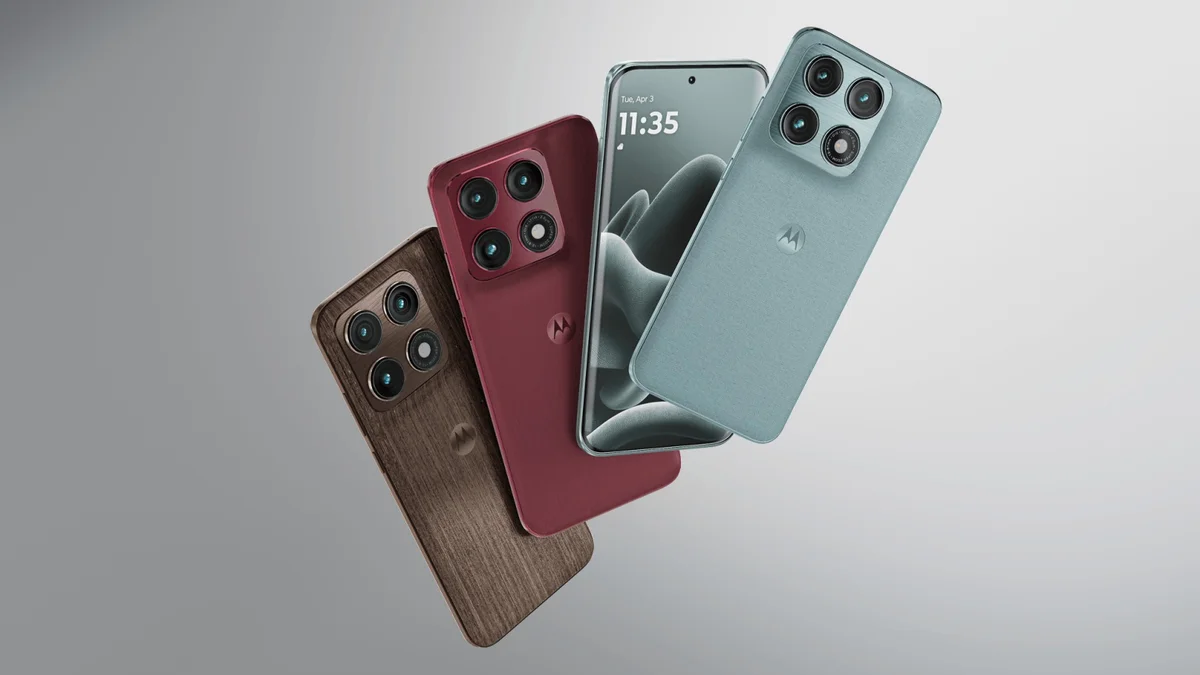
Launched on June 4, 2026, the Motorola Edge 70 Pro+ arrives as a genuine statement piece, not a minor spec bump or a cosmetic refresh. It packs a hardware-stabilized periscope telephoto lens and a next-generation silicon-carbon battery into a chassis that’s slim enough to forget you’re carrying it. Here’s what’s actually inside, and why it matters.
Inside the Edge 70 Pro+: Key Specifications
| Component | Specification | What It Means for You |
|---|---|---|
| Processor | MediaTek Dimensity 8500-Ultra | Smooth multitasking with strong power efficiency |
| RAM | Up to 16GB LPDDR5X | No background app freezing, even under heavy load |
| Display | 6.8″ Endless Edge AMOLED, 144Hz, HDR10+ | Fluid scrolling and vibrant color accuracy |
| Main Camera | 50MP Sony Lytia 710 + 3.5° OIS | Sharp, stable shots in low light |
| Telephoto | 50MP Periscope, 3.5x optical + 50x AI zoom | True optical reach without the bulky bump |
| Battery | 6,500mAh Silicon-Carbon | Up to two full days of real-world use |
| Charging | 90W TurboPower Wired | Full top-up in minutes, not hours |
01 — The Periscope Camera That Changes the Zoom Conversation
Most phones that claim “zoom capability” are doing something far less impressive: they digitally crop into the image and call it telephoto. The result is a muddy, pixelated output that looks passable in bright sunlight and falls apart everywhere else.
True periscope lenses work differently. They use an internal mirror prism to bend light through a longer focal path — meaning you get genuine optical magnification rather than a software trick. The catch has always been size. Real periscope hardware is bulky, and most manufacturers solve that problem by building bigger, heavier phones.
Motorola’s approach on the Edge 70 Pro+ is to engineer the periscope lens more tightly and house it in a slim chassis without the usual protruding camera island. The 50MP telephoto sensor delivers 3.5x native optical zoom, extending up to 50x through AI-assisted processing that preserves structural detail at range.
Paired with the primary 50MP Sony Lytia 710 sensor which features a 3.5-degree OIS assembly that physically counteracts hand movement in real time, the result is a two-lens system that covers both intimate portraits and distant subjects with genuine optical fidelity. It’s a notable step forward from what we saw in the Motorola Razr Ultra 2026 , which leaned heavily on software processing to compensate for its compact form factor.
02 — The Battery That Finally Broke the Flagship Size Ceiling
The 5,000mAh limit has quietly dominated flagship smartphone design for years. Going higher has traditionally meant thicker devices because conventional lithium-ion chemistry simply runs out of energy density room.
Silicon-carbon anodes change the math. By replacing standard lithium-ion structures with silicon-carbon composites, the battery stores significantly more energy in the same physical volume. That’s how Motorola fits a 6,500mAh cell into a phone that doesn’t feel like a slab — a technology covered in depth by MIT Technology Review.
In daily use, this translates to two full days of mixed workloads — streaming, photography, messaging, navigation — before needing a charge. When you do plug in, the 90W TurboPower wired charging system gets the battery back to full quickly enough that an overnight charge is never a requirement. For context on what sustained power delivery looks like under real hardware stress, our ASUS ROG Strix Scar 18 review goes deep on how power-dense components perform under continuous load, the same principle applies here.
Why silicon-carbon matters: Silicon-carbon anodes can hold roughly ten times more lithium ions than traditional graphite anodes, dramatically increasing energy density without requiring a physically larger cell.
03 — The 144Hz Display: Why the Refresh Rate Actually Matters
Refresh rate has become a marketing number many buyers gloss over. But the difference between 60Hz and 144Hz isn’t subtle, it’s the difference between a UI that feels like it’s catching up to your finger and one that feels physically connected to it.
The Edge 70 Pro+’s 6.8-inch Endless Edge AMOLED panel updates 144 times per second. Fast-scrolling content stays sharp rather than blurring. Game animations resolve cleanly. Even basic navigation, swiping between apps, pulling down a notification shade has a tactile responsiveness that slower panels simply can’t replicate.
HDR10+ support adds local dimming and expanded dynamic range, making streaming content on this display genuinely impressive without an external screen. If you’ve been following how input latency affects real-world performance, including what we found in the SteamOS 3.8.6 performance analysis the same responsiveness principles that matter for handheld gaming apply directly to a 144Hz mobile display.
04 — Stereo Audio with Dolby Atmos
Audio on smartphones often gets buried in spec sheets, but the Edge 70 Pro+ treats it as a primary feature. The dual stereo speaker setup runs Dolby Atmos processing, maintaining clear separation between bass, mids, and high-frequency vocals even at full volume. For media consumption without headphones, it holds up well above what most phones at this tier offer, comparable in ambition to what the Honor Win Turbo tried to deliver on the audio front, though the Edge 70 Pro+’s Dolby processing gives it a more refined output.
05 — Premium Build: Pantone Vegan Leather Finish
Beyond the internals, Motorola has put real thought into how the device feels in hand. The Edge 70 Pro+ ships with a Pantone-certified vegan leather back, a texture that not only resists fingerprints but gives the phone a grip that glass-backed flagships consistently fail to match. The “endless edge” curved display carries that premium feel to the front, though the aggressive curve does introduce the occasional accidental touch if you grip the phone tightly.
It’s a level of design refinement we haven’t seen from Motorola at this price point in a long time — and it signals the brand is serious about competing directly with Samsung and Google in the premium mid-range bracket. For a broader view of where Motorola’s design language has been heading, our coverage of the Motorola Razr Ultra 2026 traces that evolution clearly.
Verdict
The Motorola Edge 70 Pro+ makes a convincing argument that “slim” and “capable” no longer have to be opposites. The periscope camera brings genuine optical zoom to a chassis that doesn’t punish you for carrying it. The silicon-carbon battery delivers longevity that most flagships — including significantly pricier ones — still haven’t matched. If you’ve been waiting for a phone that gets the fundamentals genuinely right rather than trading one weakness for another, this is the one to watch.
What Works: ✓ 50MP periscope telephoto with real optical reach — not cropped digital zoom ✓ 6,500mAh silicon-carbon battery with two-day stamina ✓ 144Hz AMOLED display that’s responsive and vibrant ✓ Vegan leather finish that feels premium and grips well ✓ Dolby Atmos stereo speakers that hold up at max volume
Worth Knowing: ✗ Curved edge display can register accidental touches if gripped tightly ✗ 90W charging brick is bulkier than standard adapters for travel
For regional pricing, retail availability, and full engineering documentation, visit the Motorola Global News Room. Stay up to date with the latest smartphone launches at ForanTech SmartPhones.