God of War Laufey: 5 Reasons This Shocking New Reveal Changes Everything
Sony completely stunned the gaming community on June 2, 2026, dropping a shocking, surprise reveal for God of War Laufey.

The summer digital gaming season has officially kicked off with an absolute explosion of hype. For months, the global PlayStation community has been starving for concrete updates from Sony’s elite inner-circle first-party studios. While third-party publishers have spent the early part of the year dropping minor content roadmaps, players have been anxiously waiting to see what the next true generation of console exclusivity looks like.
On June 2, 2026, Sony delivered an absolute masterclass in digital presentation. Broadcasting a massive, extended PlayStation State of Play that ran for over an hour, the tech giant brought out its absolute heaviest hitters to define the future of the PS5 platform.
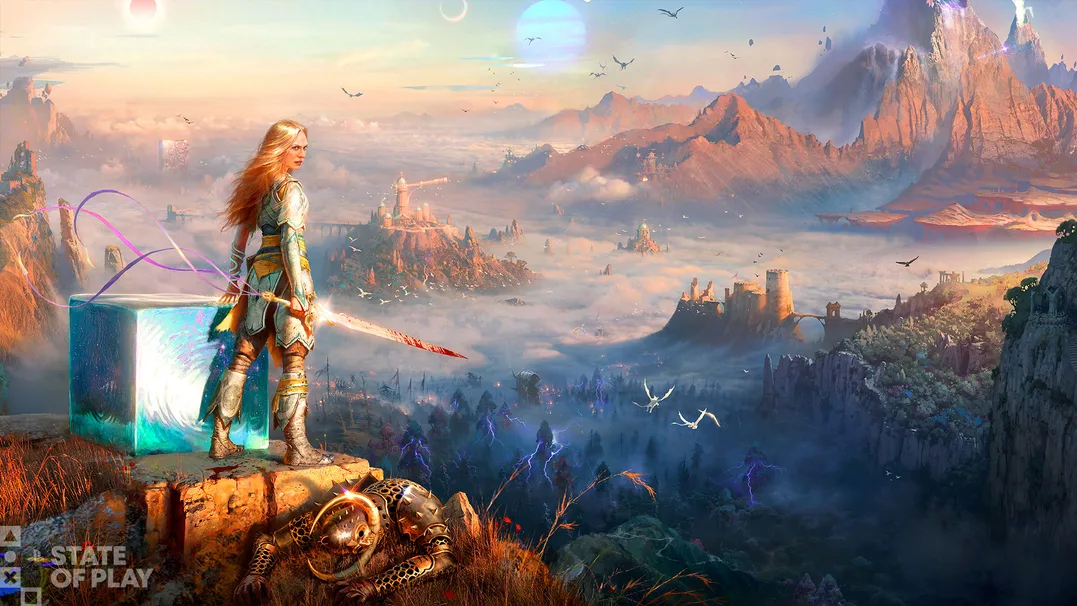
While many expected a deep dive into previously teased superhero titles, Santa Monica Studio completely stole the spotlight by closing the broadcast with the official, unannounced reveal of God of War Laufey. Shifting the franchise’s perspective from Kratos to his late warrior wife, Faye, this single announcement has completely altered the trajectory of the hardware market for the rest of the generation.
Let’s lift the lid on this newly unveiled masterpiece to see how it intends to push modern gaming physics to the limit.
Technical Specifications: Target Engine Profile
To appreciate how heavily Santa Monica Studio is pushing the boundaries of modern console hardware architecture, we can look closely at the target presentation engine metrics revealed during the live broadcast:
| Graphics / Engine Feature | Technical Target Configuration | Intended Real-World Impact |
| Main Protagonist | Laufey (Faye), voiced by Deborah Ann Woll | Fresh mechanical playstyle using giant-magic physics |
| Rendering Pipeline | Hardware-accelerated global illumination | Photorealistic mythical realms and accurate light bouncing |
| Performance Target | Native 60 FPS Performance Profile | Hyper-fluid mechanical action without tracking drops |
| Audio Architecture | Spatial 3D Audio via custom console hardware | 360-degree environmental danger and tracking cues |
| Platform Availability | Exclusive to PlayStation 5 | Built strictly for high-end console architecture architectures |
1. A Relentless Shift in Perspective: Playing as Faye
For over two decades, the God of War franchise has been synonymous with the brutal, heavy, grounded combat style of Kratos. The June 2 presentation completely shattered that structural template. God of War Laufey acts as a standalone narrative block that puts players in control of Laufey, the legendary Jotunn guardian known to fans as Kratos’ late wife and Atreus’ mother.
The extended gameplay sequence showcased an entirely unique, high-velocity combat loop. Unlike Kratos’ deliberate, crushing axe swings, Faye handles battles with breathtaking speed, weaving structural Leviathan axe prototypes together with raw, aggressive Giant magic. She moves across the battlefield with extreme agility, utilizing environmental elements to execute fluid, aerial combos. The mechanical responsiveness showcased on screen is incredible. If you read our deep-dive analysis of the SteamOS 3.8.6 System Performance Patch, you know how critical sub-millisecond input translation is to high-level action gaming; Santa Monica Studio has built a layout that registers complex mechanical adjustments instantly.
2. True Next-Gen Exclusivity: Leaving the PC Behind
One of the most fiercely debated aspects of the reveal was Sony’s strict stance on platform deployment. While many recent PlayStation titles have found their way to desktop storefronts after a short exclusivity window, PlayStation leadership has firmly confirmed that God of War Laufey is being engineered exclusively for the PlayStation 5 console architecture.
This uncompromising approach allows the developers to bypass the technical restrictions of legacy PC hardware variations. Because the game doesn’t have to support older solid-state drives or low-tier graphics processors, the world design features seamless, real-time realm-shifting mechanics without a single loading screen.
This level of hardware demand shows why top-tier software scaling is becoming mandatory to keep triple-A games running smoothly. Whether you are running an ultra-premium portable rig like the one detailed in our ASUS ROG Strix Scar 18 review or pushing a native home console to its absolute maximum limit, hardware optimization dictates the ultimate limits of visual immersion.
3. Advanced Leviathan Physics and Mythical Geometry
Beyond the narrative hook, the showcase served as a major showcase for advanced physics rendering. Faye’s journey takes her through untouched, highly volatile mythical afterlife realms populated by ancient deities who are actively hostile to her presence.
The environmental interactivity on display is jaw-dropping. Ice magic fractures dynamically based on the exact angle of weapon impact, sending thousands of individual, light-refracting shards bouncing across the floor geometry.
This level of graphical performance requires massive foundational hardware. To achieve this flatline stability under intense particle loads, the engine leans heavily on custom memory allocation streams, completely eliminating the annoying micro-stuttering that frequently breaks immersion during heavy, chaotic boss fights.
4. Acoustic Tracking: The Sounds of the Afterlife
Another massive technical pillar detailed in the post-showcase logs is the implementation of next-generation spatial audio tracking. Because the afterlife realms are shifting, chaotic spaces filled with invisible environmental threats and flanking mythical monsters, players will actively use real-time sound cues to stay alive.
The game mechanics map distinct audio frequencies directly onto the player’s audio workspace. This type of advanced engineering demands high-end hardware to appreciate fully. If you have explored the acoustic profiles discussed in our comprehensive Logitech G Pro X 2 Lightspeed review, you understand exactly how much a true graphene driver setup can alter your spatial awareness in a complex digital environment. Laufey relies heavily on that exact type of hardware precision to ensure players can pinpoint incoming danger vectors from sound alone.
5. Tracing the Multi-Generational Engineering Leap
Witnessing God of War Laufey run on modern developer kits highlights just how far the industry has come since the early days of cinematic storytelling. There was a time when “cutting-edge” graphics meant simple, uniform lighting templates and low-polygon models.
We can track this historical shift clearly by looking back at older consumer display properties; for instance, checking out the legacy layout from our classic LG G6 review reveals how much panel design, color accuracy, and rendering pipelines have evolved over the last decade. We went from flat, SDR screens trying to display muddy, compressed textures to brilliant, real-time global illumination setups that react dynamically to every single swing of a sword.
The Verdict: A Spectacular Evolution
The June 2 State of Play presentation was exactly what the PlayStation community needed. By showing a lengthy look at raw, in-engine footage, Santa Monica Studio proved that God of War Laufey is shaping up to be an absolute powerhouse title that fully justifies the investment in high-end hardware.
Pros
- Fresh Mechanical Design: Faye’s high-velocity magic brings a totally new pace to the franchise.
- Pure Hardware Optimization: Built exclusively for next-gen console architecture with zero cross-gen compromises.
- Jaw-Dropping Physics: Dynamic environmental destruction and ice fracturing look spectacular.
- Immersive Spatial Audio: Sound tracking adds a genuine tactical layer to difficult encounters.
Cons
- No PC Version: PC players are completely locked out of the experience at launch.
- The Waiting Game: The highly packed 2026 release schedule means fans will have to wait a bit longer to get their hands on the final build.
For further official community updates, asset drops, and behind-the-scenes developer blogs regarding this release, you can check out the official PlayStation Blog Interactive Portal to track upcoming trailers ahead of the official launch!
What do you think?
Are you excited to step into the shoes of Laufey and experience the Norse universe through a high-velocity magic playstyle, or do you prefer the classic, heavy combat style of Kratos? Let us know your thoughts in the comment section below!