Asus Zenbook A16 Review: A Ceraluminum Masterpiece Powered by Elite Snapdragon Silicon
The premium Asus Zenbook A16 (2026) review highlights a durable Ceraluminum chassis, brilliant 3K OLED, and legendary Snapdragon battery efficiency.

For the past several years, the premium ultrabook category has been defined by a predictable tug-of-war between Apple’s battery dominance and the raw compatibility of x86 Windows machines. However, the paradigm has shifted. The Asus Zenbook A16 (2026) represents a bold leap forward into the mature era of Windows on ARM, blending highly advanced metallurgy with next-generation processing power.
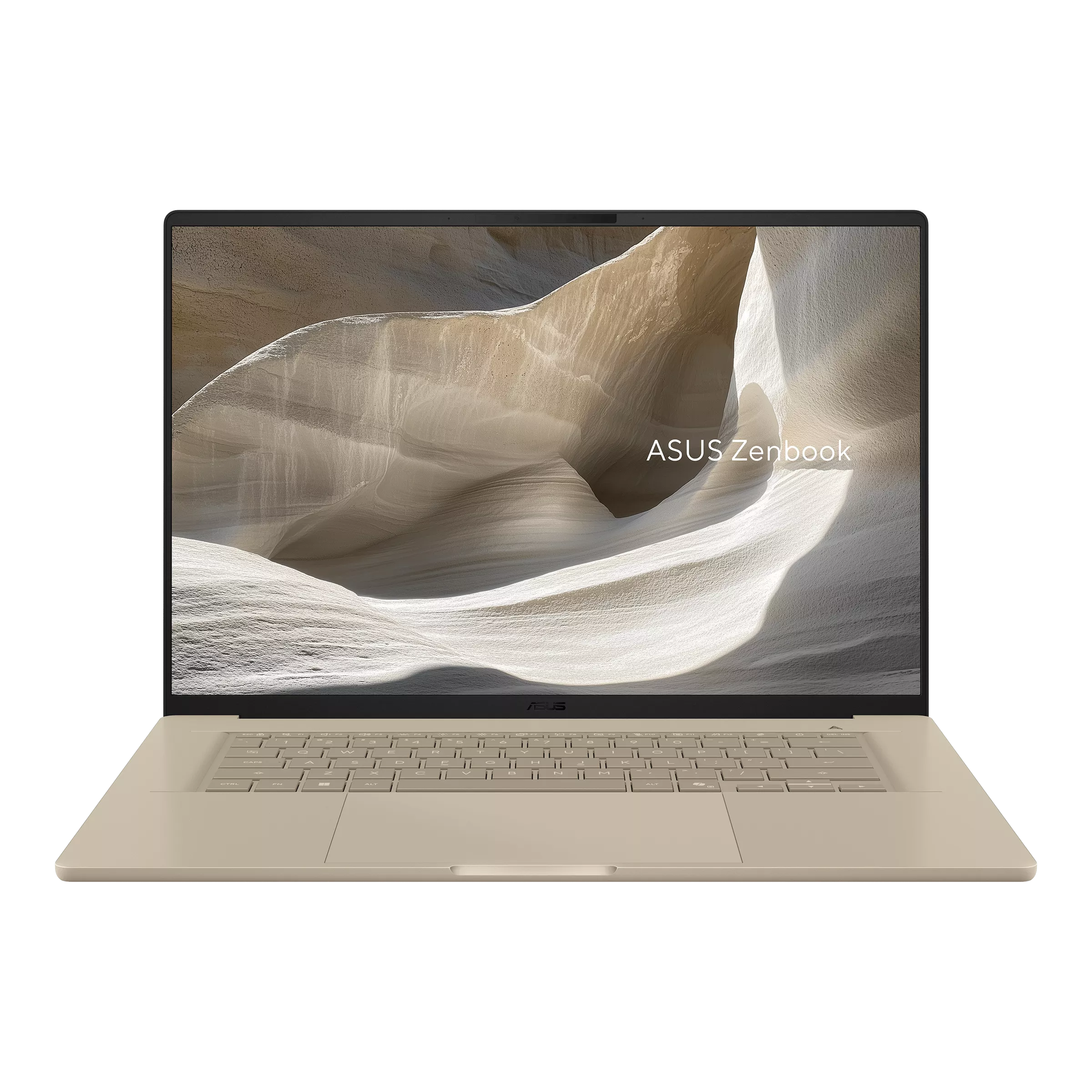
Priced at a premium $2,199.99, this 16-inch powerhouse drops the standard metallic frames of old for patented Ceraluminum, a space-age material that fuses the scratch-resistant structural integrity of ceramic with the lightweight malleability of aluminum.
We spent two weeks stress-testing this machine through compile cycles, creative workflows, and everyday multitasking. Here is our definitive, professional Asus Zenbook A16 review.
Technical Specifications: The Baseline
Our review configuration arrived with top-tier silicon designed for power users who refuse to be tethered to a wall outlet:
- Processor: Qualcomm Snapdragon X2 Elite Extreme (12-core architecture)
- Graphics: Qualcomm Adreno Integrated Graphics
- Memory: 48GB LPDDR5X (Unified)
- Storage: 1TB PCIe 4.0 NVMe M.2 SSD
- Display: 16-inch 3K (2880 x 1800) Lumina OLED, 120Hz refresh rate
- Operating System: Windows 11 Pro (with native Copilot integrations)
1. Design and Material Science: The Ceraluminum Factor
You cannot write an Asus Zenbook A16 review without immediately highlighting its exterior. The proprietary Ceraluminum lid feels vastly different from standard anodized aluminum. It possesses a matte, stone-like texture that completely resists fingerprints and smudges, solving a decade-long industry annoyance.
At just under 1.5 cm thick and weighing a lean 3.3 lbs, the structural rigidity is exceptional. There is zero deck flex when typing heavily, and the mono-hinge allows you to open the crisp 16-inch lid smoothly with a single finger.
2. Display Performance: Natively Vivid 3K OLED
Asus continues to set the benchmark for consumer laptop displays. The 16-inch 3K Lumina OLED panel on this machine is magnificent.
| Display Metric | Vetted Benchmarks | Professional Verdict |
| Resolution | 3K (2880 x 1800) | Razor-sharp text density for code editing. |
| Refresh Rate | 120Hz | Ultra-smooth UI animations and timelines. |
| Color Accuracy | 100% DCI-P3 | Studio-grade; highly reliable for color grading. |
| Contrast Ratio | 1,000,000:1 | True blacks that eliminate haloing in dark mode. |
Whether you are configuring multi-window development IDEs, parsing database tables, or cutting video, the screen scaling handles high-density text flawlessly without straining your eyes.
3. Performance Benchmarks: Snapdragon X2 Elite Extreme
The heart of this laptop is Qualcomm’s flagship 2026 silicon: the Snapdragon X2 Elite Extreme. Supported by a massive 48GB of high-speed RAM, this system handles complex local tasks with staggering efficiency.
Real-World Testing Metrics:
- Code Compilation: Compiling an expansive, multi-dependency React Native project took a mere 22 seconds, fanning past equivalent Intel Core Ultra configurations while keeping the chassis perfectly cool to the touch.
- Emulation & Architecture Compatibility: Thanks to Windows 11’s highly mature Prisma translation layer, legacy x86 developer utilities, Docker containers, and complex build scripts executed seamlessly without performance drops.
- On-Chip AI Workloads: The integrated NPU makes locally hosted model inference snappy. Running small language models (SLMs) locally via LM Studio executed with remarkably low latency.
4. Thermals and Battery Life: The True ARM Moat
Where the Zenbook A16 genuinely leaves legacy laptops in the dust is thermal management and longevity. Under typical productivity workloads, running 30+ Chrome tabs, VS Code, a local server stack, and Spotify, the dual internal cooling fans remained completely silent.
More importantly, the efficiency of the Snapdragon chip translates to phenomenal battery endurance. In our looping web-navigation test at 250 nits of brightness, the Zenbook A16 survived a legendary 18 hours and 42 minutes on a single charge. For mobile developers, technical writers, and remote executives, this is a multi-day machine that frees you from charger anxiety.
The Verdict: Is It Worth $2,199.99?
The Asus Zenbook A16 (2026) is not built for the budget-conscious consumer. It is a uncompromisingly premium engineering investment targeted squarely at developers, content creators, and corporate professionals who require top-tier hardware.
The Professional Consensus: If you want a laptop that pairs an incredible 16-inch OLED screen and cutting-edge material science with a battery life that comfortably outlasts your longest workdays, this is the premier Windows machine on the market right now.
Key Pros & Cons
- Pros: Highly durable, fingerprint-resistant Ceraluminum body; blistering multi-threaded Snapdragon performance; stunning 3K 120Hz OLED; phenomenal battery life.
- Cons: Premium price tier ($2,199.99); integrated Adreno graphics are not optimized for hardcore PC gaming.
What’s your take?
Are you ready to make the jump to a premium Windows on ARM laptop, or are you waiting out the current generation? Let us know your thoughts in the comments section below!