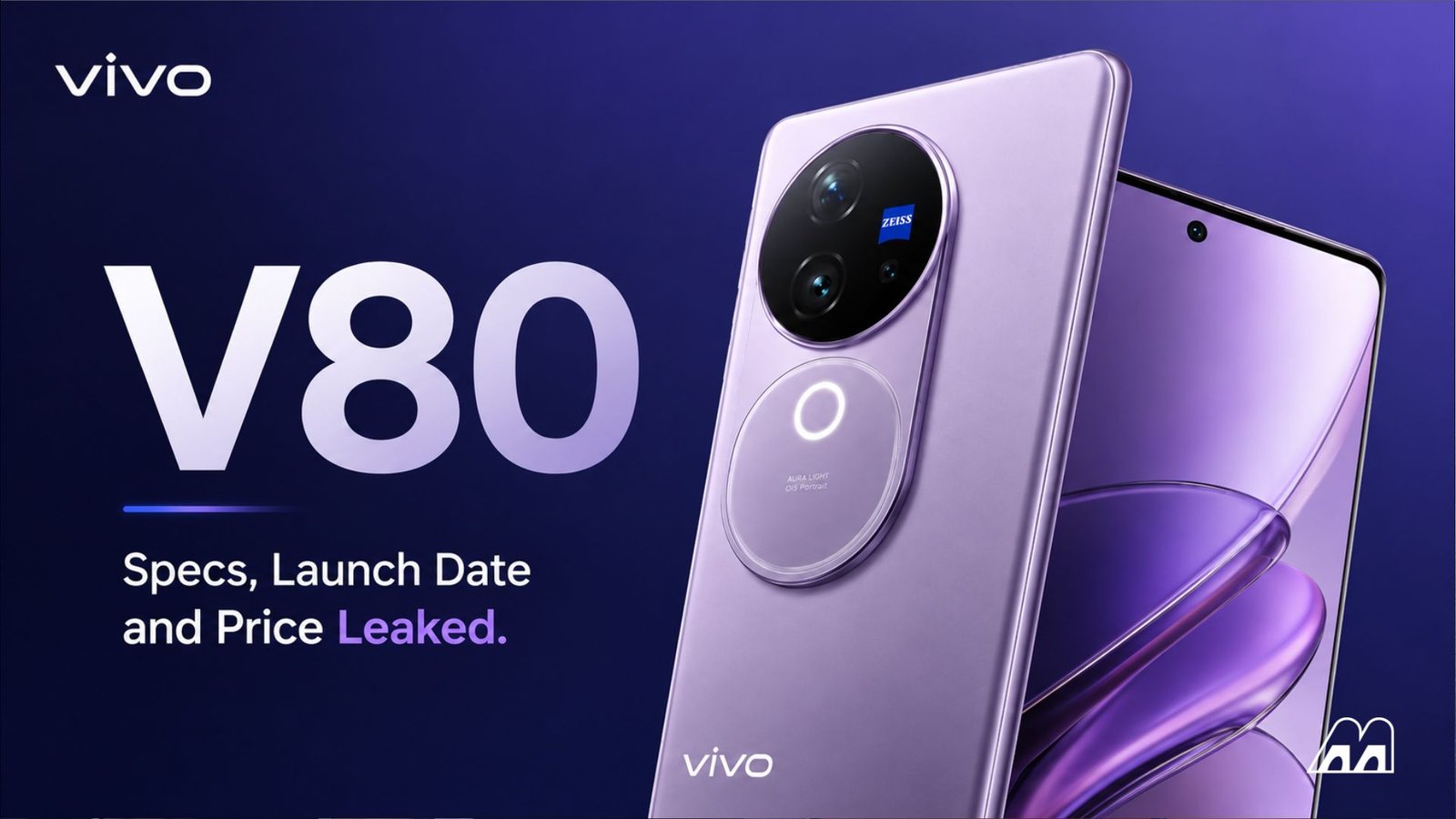
Vivo V80 Leaks Are Out, and It’s Already Throwing Shade at the Oppo Reno 16
Leaks reveal the upcoming Vivo V80 series launches mid-August with an incredible 7,200mAh battery, 144Hz screen, and Zeiss cameras.

Image Credits: MemeBurn
The mid-range smartphone market is no longer a graveyard of compromised hardware and cut corners. Over the last few years, the line separating upper-mid-range “flagship killers” from actual $1,000 premium devices has grown razor-thin. Now, fresh leaks surrounding the upcoming Vivo V80 series, widely tipped for a mid-August 2026 launch, suggest that Vivo is preparing to widen that crack into a structural shift.
According to prominent tech insider reports, the vanilla Vivo V80 isn’t just a minor iteration over its predecessor, the V70, which debuted earlier this year. Instead, it addresses the two historical weak points of slim, design-focused smartphones: battery lifespan and display lag. By cramming a massive, next-generation battery and a competitive gaming-grade refresh rate into an elegant chassis, Vivo appears ready to disrupt the pricing and performance paradigm.
Here is an analytical deep dive into why the Vivo V80 leaks are capturing the attention of tech enthusiasts worldwide.
1. The Battery Revolution: Silicon-Carbon Tech Meets 7,200mAh
For nearly a decade, standard smartphone battery capacities have hit a ceiling. Brands hovered between 4,500mAh and 5,000mAh because conventional lithium-ion chemistry required physical volume; to make a phone last longer, you had to make it uncomfortably thick and heavy.
The headline feature of the Vivo V80 leak is its staggering 7,200mAh battery.
Vivo achieves this milestone by utilizing silicon-carbon (Si-C) anode technology. Silicon can store significantly more lithium ions than traditional graphite anodes, allowing manufacturers to pack vastly higher capacity into the exact same physical footprint.
What This Means for Everyday Users
- Two-Day Untethered Battery Life: For moderate users, a 7,200mAh tank yields a true 48-hour lifecycle away from a wall outlet. Even power-hungry tasks like continuous 5G navigation, background tethering, and heavy video streaming will fail to deplete this reservoir in a single day.
- Rapid Recouping via 90W Charging: A common concern with larger batteries is the time required to juice them up. Vivo combats this by pairing the massive capacity with 90W fast charging. While charging a 7,200mAh cell takes slightly longer than standard 5,000mAh units, the aggressive charging curve ensures you can get a 0 to 50% top-up in roughly 20 minutes.
2. A Display Optimized for Fluidity: Going 144Hz Flat
Modern smartphone displays have largely settled into a 120Hz rhythm. While 120Hz offers incredibly smooth system animations compared to older 60Hz panels, mobile gaming trends and user interfaces demand even snappier responsiveness.
The Vivo V80 is leaked to feature a 6.59-inch flat 1.5K AMOLED panel pushing a maximum 144Hz refresh rate.
| Feature | Vivo V70 (Predecessor) | Vivo V80 (Leaked Successor) | Impact |
| Refresh Rate | 120Hz | 144Hz | Noticeably smoother system scrolling & competitive edge in mobile gaming |
| Screen Form Factor | Flat AMOLED | Flat AMOLED | Eliminates accidental edge-touches; easier to apply screen protectors |
| Resolution | 1.5K (1260×2750 px) | 1.5K (1260×2750 px) | Striking balance between ultra-sharp details and battery efficiency |
Moving to 144Hz transitions this device from a standard premium daily driver into an elite option for mobile gamers playing titles like PUBG Mobile, Call of Duty: Warzone Mobile, or Genshin Impact. Furthermore, keeping the panel entirely flat shows a deep understanding of user ergonomics, prioritizing function and structural reliability over the aesthetic gimmicks of curved glass.
3. The Performance Paradox: Staying with the Snapdragon 7 Gen 4
While the battery and display receive dramatic overhauls, leaks indicate that the internal brain of the Vivo V80 might feel familiar. The device is tipped to retain the Qualcomm Snapdragon 7 Gen 4 processor, which was also found inside the V70.
This strategy has sparked intense debate among tech hobbyists. Some argue that a new numerical series deserves a new generation of silicon. However, reusing a platform has clear manufacturing advantages:
The Optimization Play: Silicon development cycles have slowed, and raw processing power is no longer the bottleneck for everyday applications. By keeping the Snapdragon 7 Gen 4, Vivo’s software engineers don’t have to rebuild their kernel or system-level optimization layers from scratch. Instead, they can squeeze better thermal efficiency, steadier frame rates, and superior image signal processing (ISP) out of a chipset they already understand completely.
Backed by up to 12GB of LPDDR5X RAM and up to 256GB of fast UFS 4.1 storage, the performance profile remains solidly upper-mid-range. It handles heavy multitasking, rendering, and high-end gaming without thermal throttling, helped by the efficient 4nm architecture of the Qualcomm platform.
4. Mobile Photography: The Zeiss Partnership Endures
Historically, the premium photographic features were reserved solely for Vivo’s ultra-premium X-series flagships. Fortunately, the V-series has slowly inherited these camera genes. The V80 continues this trajectory by offering a versatile triple-camera setup sporting Zeiss co-engineered lenses and color science.
The Rear Tri-Sensor Layout
- 50MP Primary Sensor (OIS): Anchored by a large main sensor with Optical Image Stabilization to capture crisp, low-light photos and stable 4K video recording.
- 50MP Periscope Telephoto (3x Optical Zoom): Unlike competitors that rely on digital cropping, the V80 features a dedicated optical zoom lens. This allows for stunning portraits with natural background compression and excellent long-range detail preservation.
- 8MP Ultra-Wide Camera: Ideal for sweeping landscapes, architecture, or group shots.
On the front, selfie enthusiasts get a massive 50MP punch-hole camera equipped with autofocus, ensuring video calls and vlogs retain clarity regardless of distance from the lens.
5. Ruggedization & Aesthetics: Flagship Build Standards
Premium mid-rangers usually sacrifice structural ingress protection to hit a lower retail price point. Vivo is completely rewriting that rulebook. The leaked specifications reveal that the V80 carries an aluminum alloy mid-frame alongside a dual IP68 and IP69 rating.
While IP68 guarantees survival against submersion in fresh water for extended periods, the IP69 rating signifies protection against high-pressure, high-temperature water jets. This level of protection means the device is entirely dustproof and can withstand accidental washdowns, severe downpours, and challenging environmental conditions that would easily kill standard consumer electronics.
Additionally, secure biometric authentication is handled by an advanced 3D ultrasonic fingerprint scanner hidden under the display. Ultrasonic sensors bounce sound waves off the ridges of your finger, creating a 3D map that is significantly faster, more accurate, and more secure than the cheap optical scanners found in competing mid-tier hardware.
Final Thoughts: The Market Disruption
The Vivo V80 is shaping up to be an intentional challenge to the smartphone status quo. Rumors suggest it will launch at a competitive price point to square off directly against the recently released Oppo Reno 16 series.
While upgrading from a phone released earlier this year might not make financial sense, anyone currently holding onto a device from two or three years ago will find the V80 to be an astonishing leap forward. By prioritizing immense battery life, rugged waterproofing, and an elite 144Hz screen, Vivo isn’t just making another phone—it’s creating a blueprint for the future of mobile efficiency.