SteamOS 3.8.6 Launch: This Ultimate Speed Upgrade Changes Everything
Valve officially deployed SteamOS 3.8.6, unleashing massive input latency reductions and major performance optimization patches for third-party handheld gaming consoles.

The battle for handheld gaming supremacy just took an unexpected turn, shifting entirely from physical chip design to foundational operating system software. While hardware manufacturers have spent the last few months fighting over screen sizes and advanced processing architectures, Valve just quietly reminded the entire tech industry that ecosystem support is what truly defines a premium portable user experience.
In a major surprise deployment rolling out directly to testing channels, Valve officially launched SteamOS 3.8.6 Beta (codenamed “Second Clutch”). While it looks like a simple mid-year patch on paper, the massive under-the-hood engine upgrades introduced in this release provide direct, tangible benefits not just for the Steam Deck, but for the entire competitive ecosystem of x86 Windows-based handheld devices.
From specialized controller layout maps to cutting-edge display scaling, this system software update is an absolute game-changer for mobile power-users.
Technical Overview: Core System Changes
To understand how extensive this architecture update is, we can analyze the major components upgraded inside the SteamOS core system repository:
| System Layer Affected | Technical Upgrade Implemented | Intended Real-World Impact |
| Handheld Controller Input | Latency reduced from 5–8ms down to 100–500 microseconds | Near-instantaneous response times in competitive games |
| Desktop Environment | KDE Plasma upgraded to version 6.4.3 using Wayland | Drastically smoother multitasking and zero UI stutter |
| Third-Party Handhelds | System, TDP, and RGB firmware support expanded | Seamless out-of-the-box compatibility without Windows |
| Display & Variable Refresh | Advanced VRR frame pacing and external HDR maps | Elimination of display tearing during micro-stuttering |
1. The Death of Latency: Sub-Millisecond Input Response
The absolute crown jewel of the SteamOS 3.8.6 update is a staggering optimization made to the integrated handheld controller input pipeline. For years, mobile PC gamers have quietly accepted a baseline polling delay. Traditional handheld controller tracking layers usually register inputs somewhere between 5ms and 8ms. While that sounds small on paper, it introduces a subtle, heavy feeling when executing precise mechanical maneuvers in fast-paced action titles or high-speed racing simulations.
Valve’s engineering team completely rewrote the input driver translation layer. According to the official developer release documentation, handheld controller input latency has been slashed from 5–8ms down to a near-zero 100–500 microseconds.
This represents an almost unbelievable reduction in tracking delay. By forcing input polling directly into sub-millisecond territory, games feel dramatically more responsive. Triggers break instantly, directional changes happen without physics smoothing, and navigation feels as fast as a dedicated, desktop-grade peripheral setup. If you’ve spent any time reading our Logitech G Pro X 2 Lightspeed review, you know how vital zero-latency input translation is for competitive gaming; Valve is now bringing that desktop-level immediacy straight to internal mobile controllers.
2. Breaking Windows: Unlocking Third-Party Handheld Power
While the Steam Deck obviously benefits from this update, the real story here is how Valve is actively and aggressively optimizing its platform to run on devices manufactured by its direct rivals. Windows 11 remains a powerful operating system, but its standard desktop design can feel incredibly clunky, heavy, and power-hungry when forced onto an 8-inch portable gaming device. Because of this, thousands of enthusiasts choose to format their third-party handhelds to run Linux-based alternative operating systems.
SteamOS 3.8.6 introduces extensive native support configurations for flagship competitor devices:
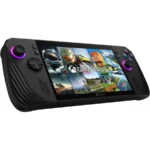
- Advanced Controller & TDP Management: The update adds complete, built-in system mapping, Thermal Design Power (TDP) control configurations, and integrated speaker audio support directly for the ASUS ROG Xbox Ally series.
- Next-Gen Hardware Optimization: The system adds official controller, TDP, and customizable RGB LED alignment options tailored precisely for the newer Lenovo Legion Go 2.
- Storage and Stability Fixes: The update delivers vital SD card stability patches to resolve long-standing memory reliability glitches plaguing the original ROG Ally, MSI Claw, and the Lenovo Legion Go lineup.
This aggressive software expansion proves that Valve isn’t just trying to sell their own tracking hardware anymore. They are actively positioning SteamOS to become the universal, definitive operating system for the entire global handheld gaming market. This level of optimization means you don’t necessarily have to buy massive, top-tier desktop replacements anymore to get elite mobile frame times; you can check out our ASUS ROG Strix Scar 18 review to see what top-of-the-line portable hardware looks like when pushed to its absolute limit.
3. Desktop Mode Overhaul: Welcome to KDE Plasma 6.4.3
For power-users who treat their portable devices like functional pocket computers, the update brings an enormous quality-of-life leap to the built-in Desktop Mode. Valve has upgraded the underlying Arch Linux system base and completely modernized the graphical desktop environment by elevating KDE Plasma to version 6.4.3 (jumping up significantly from the aging 6.2.5 build).
Crucially, Desktop Mode now transitions to utilizing the Wayland display server protocol by default rather than legacy X11 systems. Wayland handles application windows, system display scaling, and frame composition far more efficiently than older rendering servers.
This core switch effectively eradicates the frustrating performance drop-off where navigating the standard desktop mode felt sluggish compared to the smooth, dedicated Game Mode overlay. Apps open quicker, workspace switching is instant, and tracking windows across complex menus feels effortlessly smooth.
Moving Beyond Hardware Limits
This development trajectory highlights why the modern mobile market is shifting. Having a fast processor doesn’t mean much if the user interface drops inputs, stutters during display transitions, or struggles with basic panel output scaling.
Display technology scaling has always been a structural hurdle for mobile form factors. We noted a similar evolution in visual software management way back in our classic LG G6 review, which proved that how an operating system handles aspect ratios and panel properties matters just as much as raw resolution. By prioritizing sub-millisecond controller response times, polishing variable refresh rate (VRR) frame pacing, and actively patching hardware flaws on rival devices, Valve is building an incredibly resilient software ecosystem.
For further details regarding Valve’s continuous software iteration pipeline, you can explore the official Steam Deck Steam Community Hub to track active dev feedback loops and beta schedules.
What do you think?
Will you be installing this new SteamOS update on your third-party handheld device, or do you prefer sticking strictly to a native Windows 11 environment for maximum game launcher compatibility? Let us know your thoughts in the comments section below!