Google Fitbit Air: Health Tracking for the AI Generation
The screenless Google Fitbit Air redefines wearable health with 7-day battery life, ambient biometric tracking, and personalized Gemini AI fitness coaching.

There is an underlying anxiety that comes with modern smartwatches. The constant buzz of notifications, the bright glowing screen demanding your attention, and the subconscious urge to check your wrist every three minutes.
With the launch of the Google Fitbit Air, Google is betting that the future of wearable health tech isn’t more screen—it’s no screen at all.
Following a period where tech enthusiasts wondered if Google would phase out the brand in favor of the Pixel Watch, the Fitbit Air represents a massive, necessary reinvigoration. It’s a screenless, distraction-free health tracker that directly targets premium competitors like Whoop. By shifting the focus away from digital noise and placing it entirely on ambient, AI-driven wellness, the Fitbit Air is a fascinating evolution. Whether stripping away the hardware display is worth the $99.99 entry price is what we aim to break down.
Design: Breaking the Screen Addiction
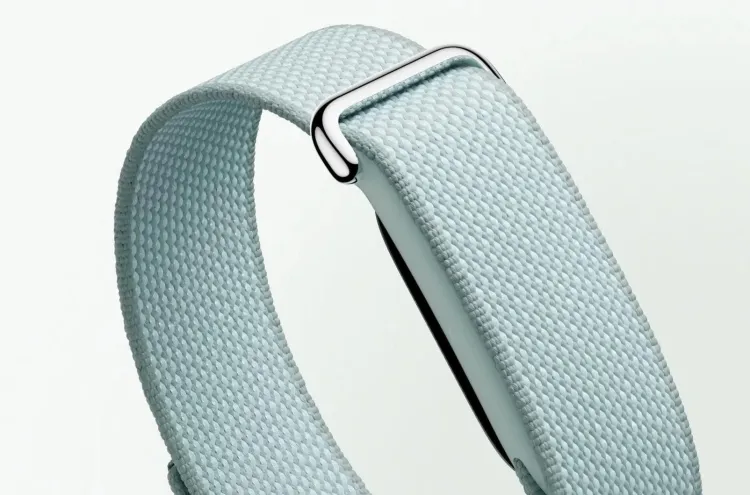
The most striking feature of the Google Fitbit Air is what’s missing. There is no AMOLED display, no digital crown, and no glass face to scratch. Instead, it features a sleek, ultra-low-profile tracking capsule that sits completely flat against your wrist.
- Material & Comfort: The build is lightweight and sits snugly under a variety of interchangeable woven and silicone bands. It is designed to be worn 24/7, and because it lacks a rigid glass screen, it effortlessly slips under tight sleeves and doesn’t dig into your skin during sleep or high-intensity workouts.
- The Interaction Model: Without a touchscreen, interaction happens primarily behind the scenes. The sensor array rests flush against your skin, using a series of advanced biometric inputs to record data without needing manual input. It feels less like a gadget and more like a natural extension of your body.
The minimalism is a refreshing change of pace for anyone experiencing notification fatigue. However, if you are someone who relies on your wrist to read incoming text messages or check the time during a run, the Air’s screenless philosophy will require a massive adjustment period.
Health & Sleep Tracking: Ambient Intelligence
Don’t let the bare-bones exterior fool you—underneath the hood, the Fitbit Air is packed with a dense suite of advanced sensors monitoring your vitals.
The tracker utilizes continuous heart rate monitoring, SpO2 (blood oxygen) tracking, skin temperature variation, and electrodermal activity (EDA) sensors to map out your daily stress, exertion, and recovery metrics.
Where the Air genuinely shines is its integration with the unified Google Health app. Rather than just handing you raw numbers, the system uses AI sensor fusion to interpret your data into actionable advice.
Real-World Impact: Sleep tracking on the Air is exceptionally accurate because the device doesn’t suffer from accidental screen wake-ups in the dark. The app breaks down your sleep stages perfectly, highlighting deep and REM cycles while correlating sudden heart-rate spikes with changes in your baseline skin temperature.
The AI Ecosystem: Gemini Takes the Coach’s Seat
Because there is no on-device interface, your entire experience lives inside the software. This is where Google leverages its massive machine learning capabilities.
The Fitbit Air introduces a deep integration with the Gemini-powered Google Health Coach. Accessible via a premium subscription ($9.99/month, though it ships with a free 3-month trial), this AI coach changes the dynamic of how a fitness tracker communicates with you.
Instead of generic alerts telling you to walk more, you can chat with the Gemini coach in plain language:
- “Why did my recovery score drop today even though I slept 8 hours?”
- “Based on my last three workouts, what pace should I target for my 5K tomorrow?”
The AI parses your historical data, recognizes patterns (like an elevated resting heart rate after late-night meals), and responds with highly personalized, natural-sounding guidance. It is an impressive showcase of consumer AI that adds genuine value, though keeping the deepest insights locked behind a monthly paywall will inevitably frustrate casual users. Fortunately, the base tracking and standard health scores remain completely functional without a subscription.
Battery Life: A Full Week of Freedom
One of the greatest benefits of removing a power-hungry display is the massive leap in endurance.
In our testing, the Fitbit Air easily hit its advertised 7-day battery life on a single charge. Compared to standard smartwatches that require a daily trip to the charger, a full week of continuous wear means fewer gaps in your health data.
Charging is handled via a proprietary magnetic dock. If you happen to run completely flat, a quick 5-minute fast charge injects enough juice to get you through a full day of activity and sleep tracking—making it incredibly forgiving if you’re in a rush before heading out the door.
Google Fitbit Air vs. The Competition
| Feature | Google Fitbit Air | Whoop 4.0 | Apple Watch SE |
| Price | $99.99 | Subscription Only ($239+/yr) | $249 |
| Display | None | None | Retina OLED |
| Battery Life | Up to 7 Days | Up to 5 Days | ~18 Hours |
| Subscription | Optional ($9.99/mo for AI Coach) | Mandatory | None |
| Ecosystem | Android & iOS (Google Health) | Independent App | Apple Only |
The Verdict
The Google Fitbit Air is a bold, highly focused pivot for a brand that needed a distinct identity. It manages to deliver incredible health insights, durable battery life, and powerful AI coaching into a highly unobtrusive package that completely eliminates digital distractions.
The $9.99 monthly fee for the advanced Gemini Coach is a drawback, and the lack of an on-device clock means you’ll still be reaching for your phone to check the time. But at $99.99, it offers an incredibly affordable, screen-free alternative to high-end fitness bands while outlasting standard smartwatches by days.
If you are looking to disconnect from screen time without disconnecting from your health goals, the Fitbit Air is exactly what the doctor ordered.
Forantech Rating: 8.8 / 10
- Buy if: You want distraction-free health tracking, exceptional battery life, and personalized AI coaching without wearing a bulky smartwatch.
- Skip if: You need on-wrist notifications, use your wearable as a watch, or strongly dislike monthly subscription paywalls for advanced software features.